
“A man without a sense of fashion is a man without a soul”.
~ from Donna Leon’s mystery novel, “A Question of Belief”
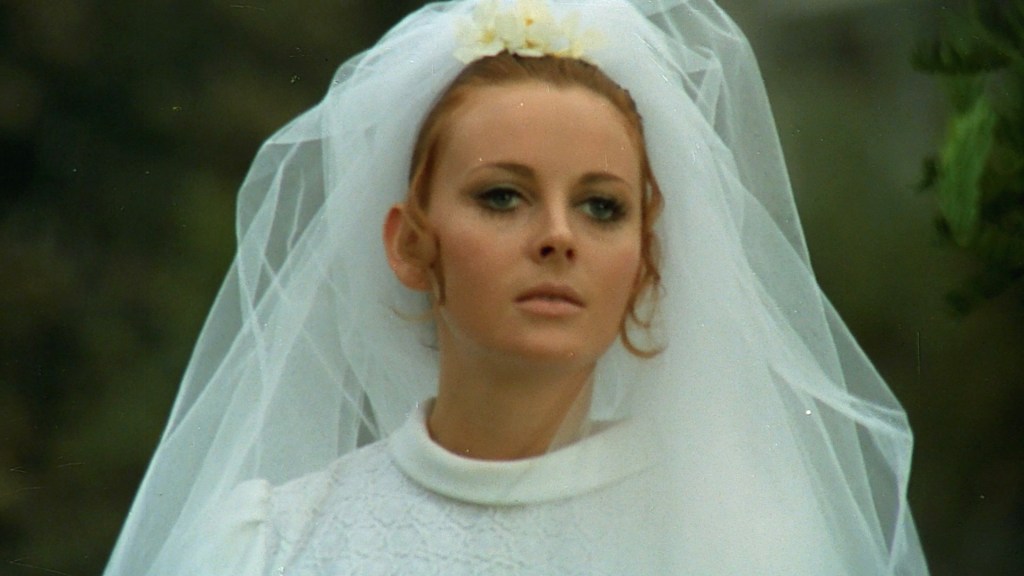
After witnessing the brutal slayings of his mother and her new husband on their wedding night, young John Harrington matures into a self-proclaimed “paranoiac” whose murder switch is triggered by young brides-to-be. He carries the repressed memory of his mother’s murder throughout the course of the film, with each killing taking him closer to remembering what really happened on that fateful night.
Dashes of red and blue-gray cremains serve as a backdrop for the psyched-out opening credit sequence which is accompanied by a brassy, easy-listening musical score by composer Sante Maria Romitelli.
Mario Bava’s wedding-themed horror film, IL ROSSO SEGNO DELLA FOLLIA aka HATCHET FOR THE HONEYMOON, features homicidal bridal fashion house owner John Harrington (portrayed by Stephen Forsyth) as a soulless –albeit handsome– dude who is the antithesis of the aforementioned quote. If “clothes make the man”, John’s wardrobe is disingenuous, camouflaging who he is underneath; an insane necrophiliac who butchers engaged and newlywed women in a murdered-out uniform.
Billed as a Giallo with paranormal tendencies, HATCHET FOR THE HONEYMOON has all the makings of a Gothic horror film, containing key elements such as:
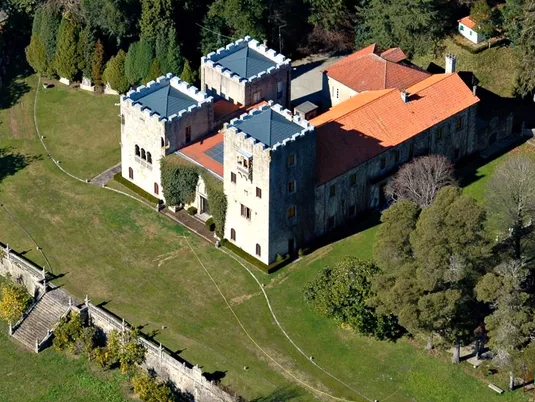
A tortured male protagonist. A strained romantic triangle between the long-suffering John, his disparaging wife, Mildred (Laura Betti), and a beguiling bridal model, Helen (Dagmar Lassander). A grand 17th-century setting resplendent with Baroque and Rococo architecture and interior design. Ghostly apparitions. Damsels in distress. Madness. Mystery. Atmosphere. Death.
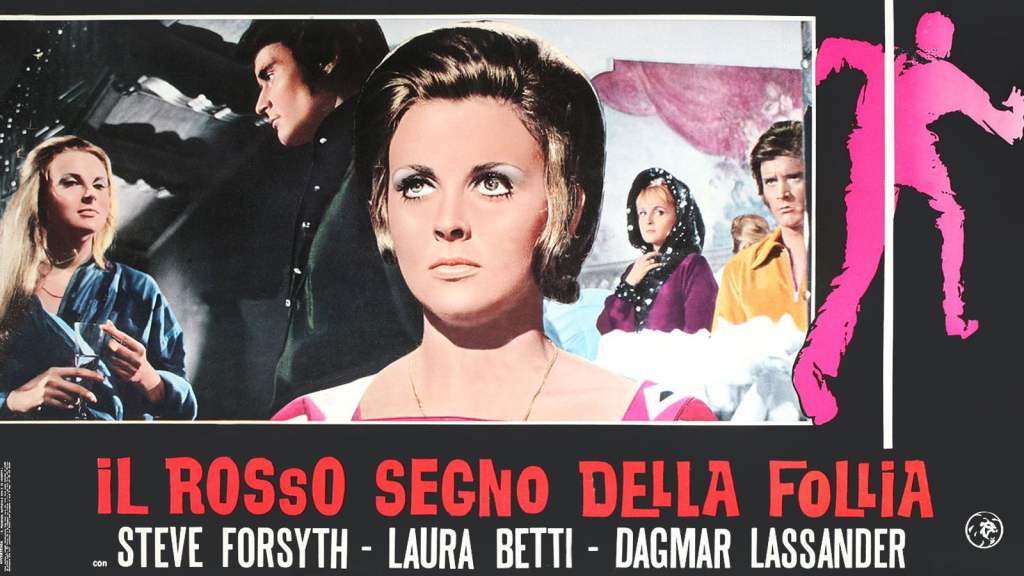
Aside from the traditional Gothic conventions or the Childhood Trauma and “Til Murder Do Us Part” tropes, HFTH is, of course, chock-full of lovely bridal gowns, all designed and created by Spanish dressmaker Jose Maria Tresserra. Searching the web didn’t turn up much background on Tresserra other than he is from a large, artistic family, which includes his acclaimed furniture designer brother, Jaime Tresserra. He was also a member of the fashion council, Moda Seleccion. His only other film credit is the Spanish thriller MORBIDNESS (1972), another “bridal horror” genre entry. Beginning with an intro that owes something to the influential Giallo, LIBIDO (1965), the story continues to reference earlier horror films, while winking furiously.
‘60s Fashion Trends
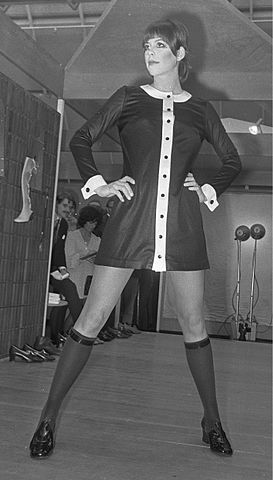
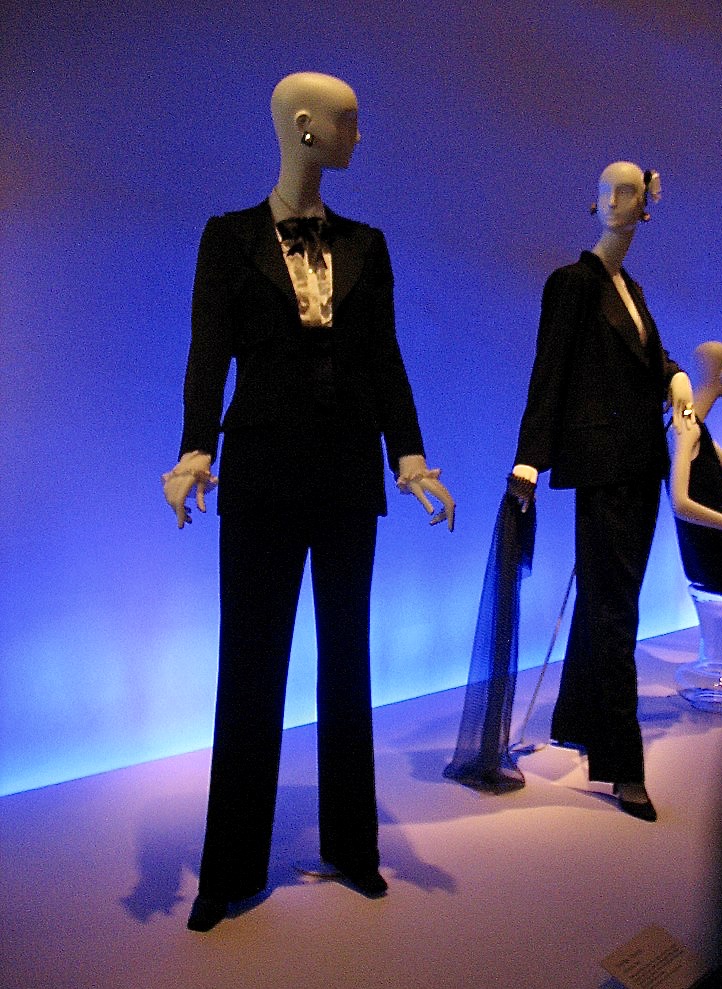
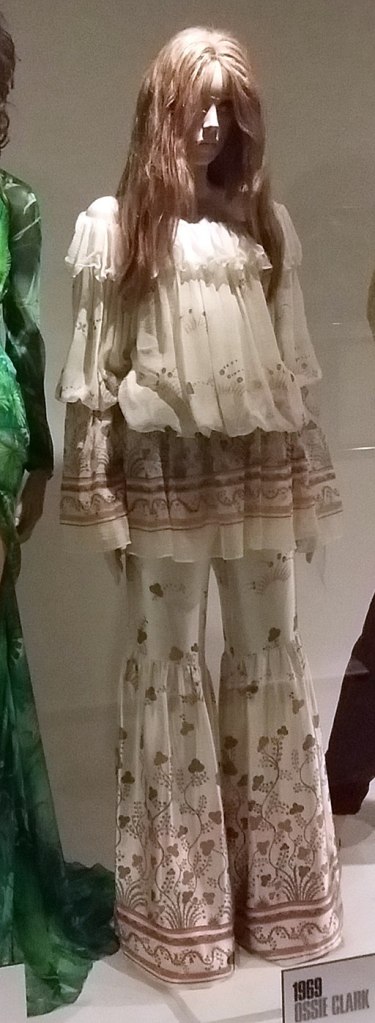
Left: de Nijes, J., 1969. Mary Quant fashion show in Utrecht, Netherlands. The “Diabolo” micro-mini dress is worn with shoes and sheer pop socks. Center; Hilowitz, D., 2011. Yves St. Laurent vintage “le smoking” suit at deYoung Museum in San Francisco. Right: Mabalu, 2015. Ossie Clark‘s white satin flounced trousers and chiffon tunic in Celia Birtwell’s “Botticelli” print. Dress of the Year 1969.
The revolutionary ‘60s era was ending as filming began in the late fall of 1968. It had been a tumultuous decade that shook the world with multiple wars, assassinations, and civil rights and social change movements. Fashion responded to the world’s political and social turmoil, first through counterculture movements such as the Youthquake and Beatnik street styles of the early to mid-60s and ending with the hippie movement of the late ‘60s. Female gender expectations changed during this time, and the glamorized hourglass silhouette that stressed the femininity of the ‘50s woman was transformed into a gamine and waifish style. Women re-emerged from the previous decade with a new sense of casualness, playfulness, and childhood indulgence. The bullet bra, wasp waist, and pencil skirt were swapped out for a youthful, more childlike appearance. Fashionable young women in the Youthquake scene found inspiration in bright colors, baby doll silhouettes, ruffles, bows, and raised hemlines. The miniskirt, popularized by Mary Quant, became a form of feminist expression and the international symbol of the London Look. Mod guys with Beatles-inspired mop-top hair wore paisley scarves and cool slim-fit suits, and rockers dressed in black leather motorcycle jackets and jeans. Hippies embraced their bohemian style with flowing, ethnic-inflected fashions in vibrant hues and exhilarated prints. With the launch of Yves Saint Laurent’s tuxedo suit, a brand-new tradition of designing clothing with career women in mind was born, such as Foale and Tuffin’s Zandra Rhodes-made trouser suits. The synergy of these various fashionable movements created an eclectic, colorful, and optimistically modern fashion decade.
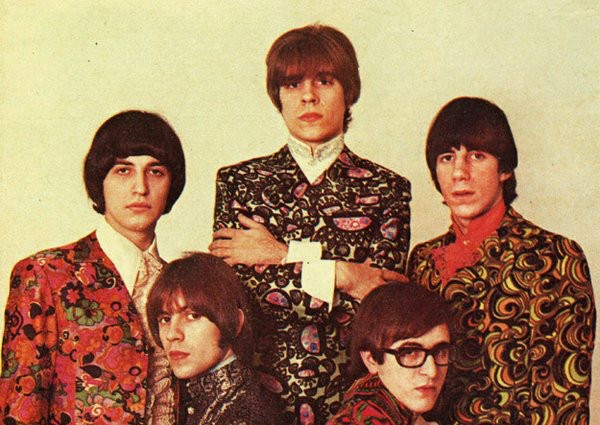
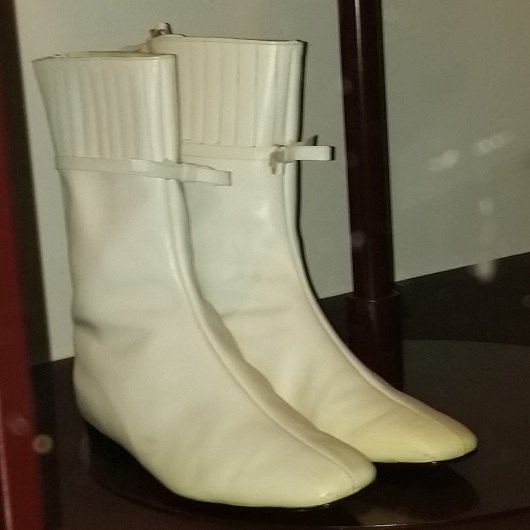
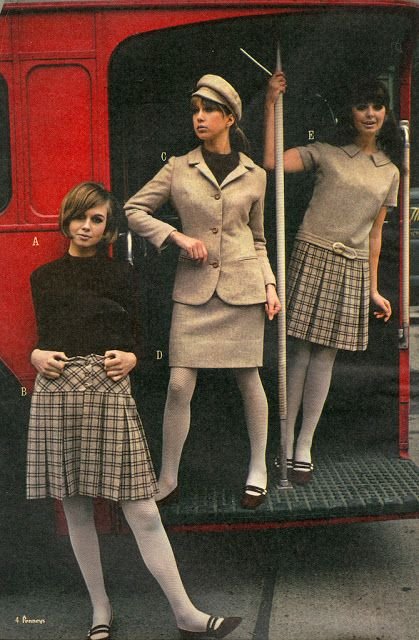
Top photo: Argentinian rock group Los Gatos, epitomizing peacock style in bright-colored jackets. Bottom photo: Mabalu, 2015. André Courrèges gogo boots in white kid leather. Right photo: JC Penney catalog fashions featuring 60s It Girl Pattie Boyd (center).
‘60s Fashion in HFTH
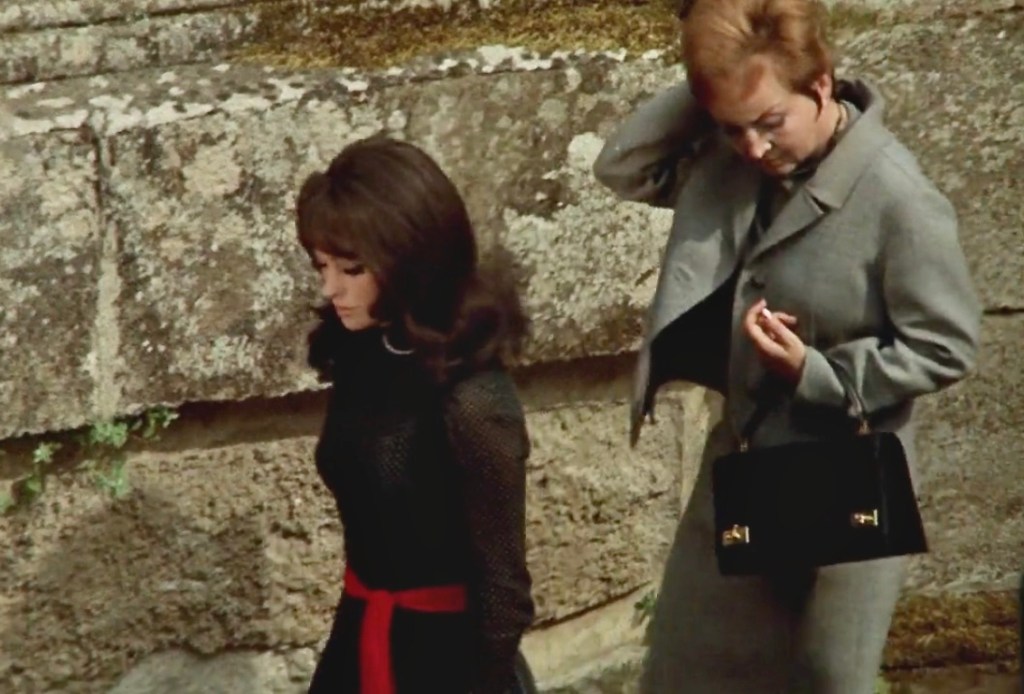
While Hatchet for the Honeymoon’s main fashion focus is mostly on the trio of John, Mildred, and Helen –and the bridal wear of course– other glimpses of late ‘60s clothing are scattered throughout. At Harrington House and its environs, male petite mains, photographers, and other employees are dressed casually in short-sleeved, spread-collar shirts and straight-legged slacks. A-line dresses dominate the models’ wardrobes, while female employees bustle around in short pink smocks. The head assistant to the fashion house, Louise (Antonia Mas), wears a sweater decorated with molting peacock feather motifs and paired with an avocado green pencil skirt. Bridal model Alice Norton arrives at the atelier wearing a flirty black polka-dot mesh dress with a red sash. In a subsequent fashion shoot scene, Alice’s fiance appears in a safari-style bush jacket and matching trousers, a popular look at the time.
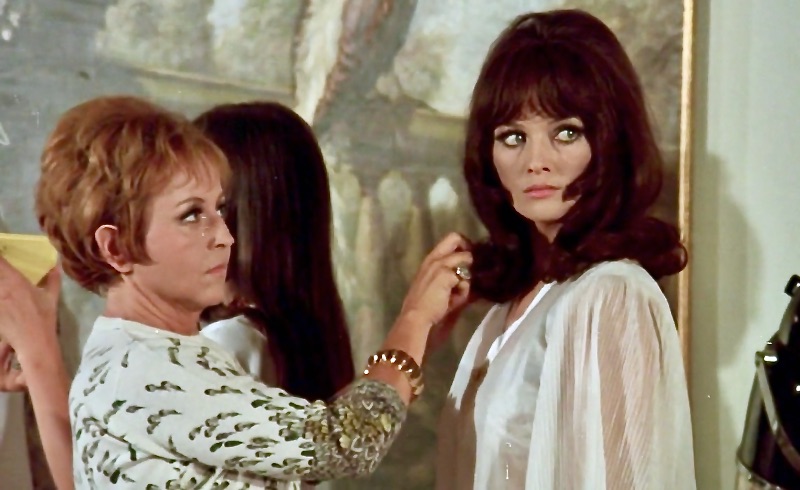
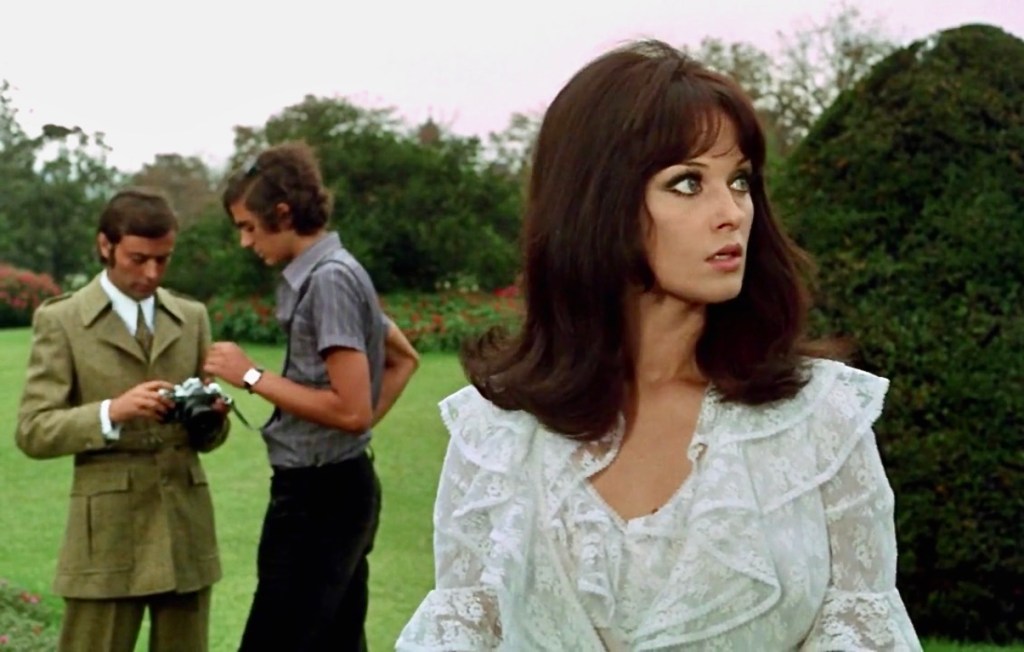
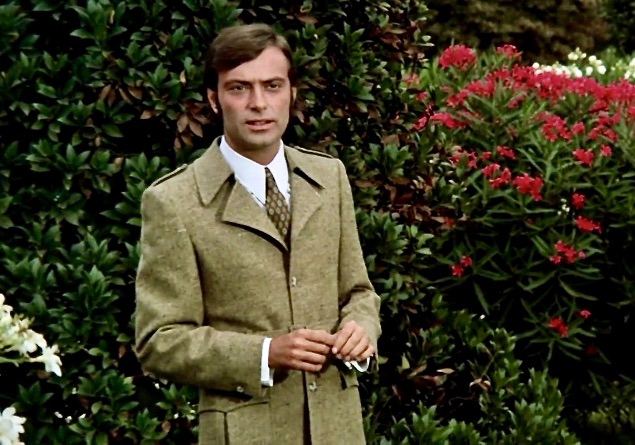

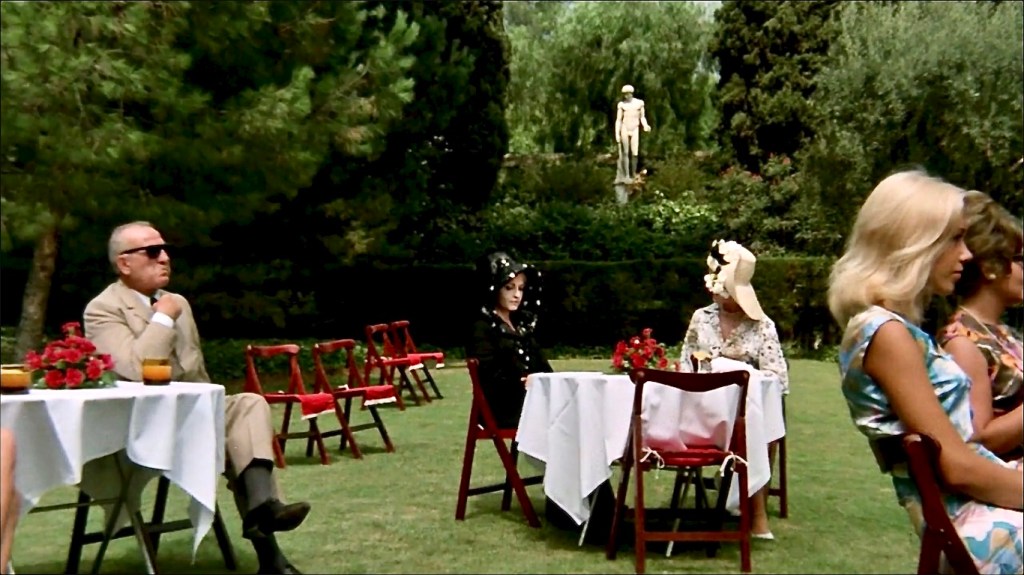
A garden party fashion show scene later in the film highlights the outfits of the soon-to-be bride Betsy Wester and her mother, Lady Wester. The elder Wester is wearing a wide-brimmed straw hat, with white flowers sprouting from her hat and a flower-printed tea dress. Her daughter Betsy, dressed in an ivory lace mini dress that skims the upper thighs and discerning matching shorts underneath, epitomizes the look of the times and seems perfectly color-coordinated with her pet poodle.
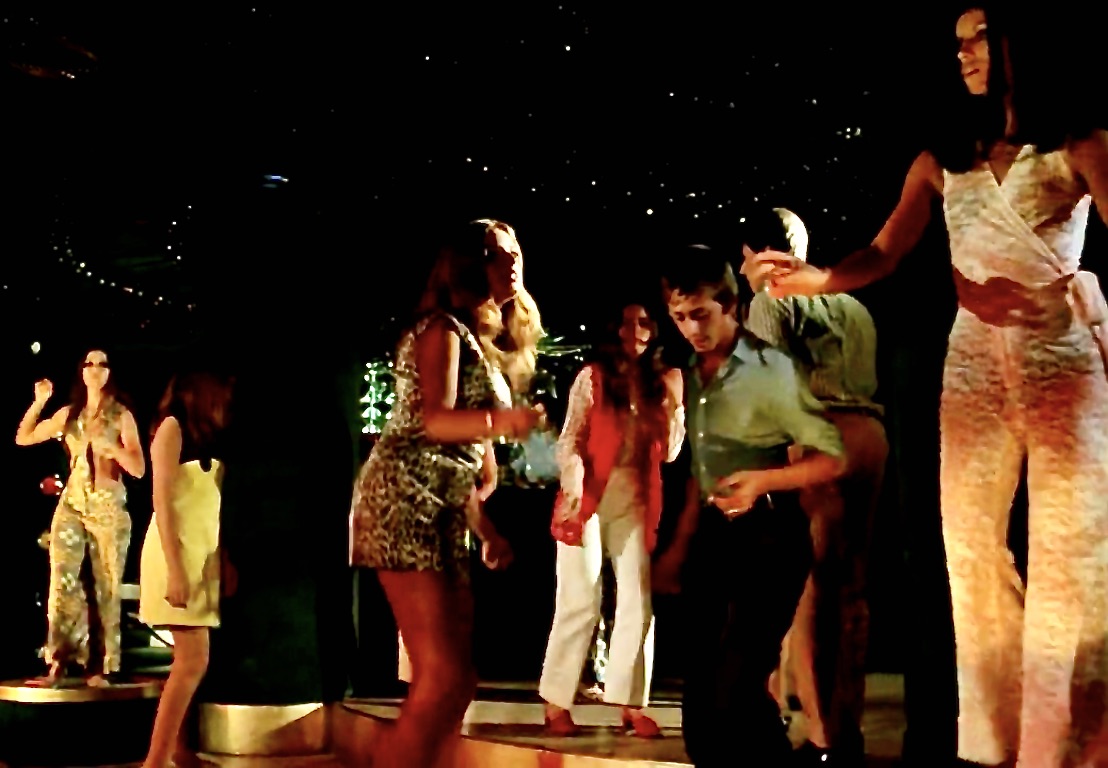
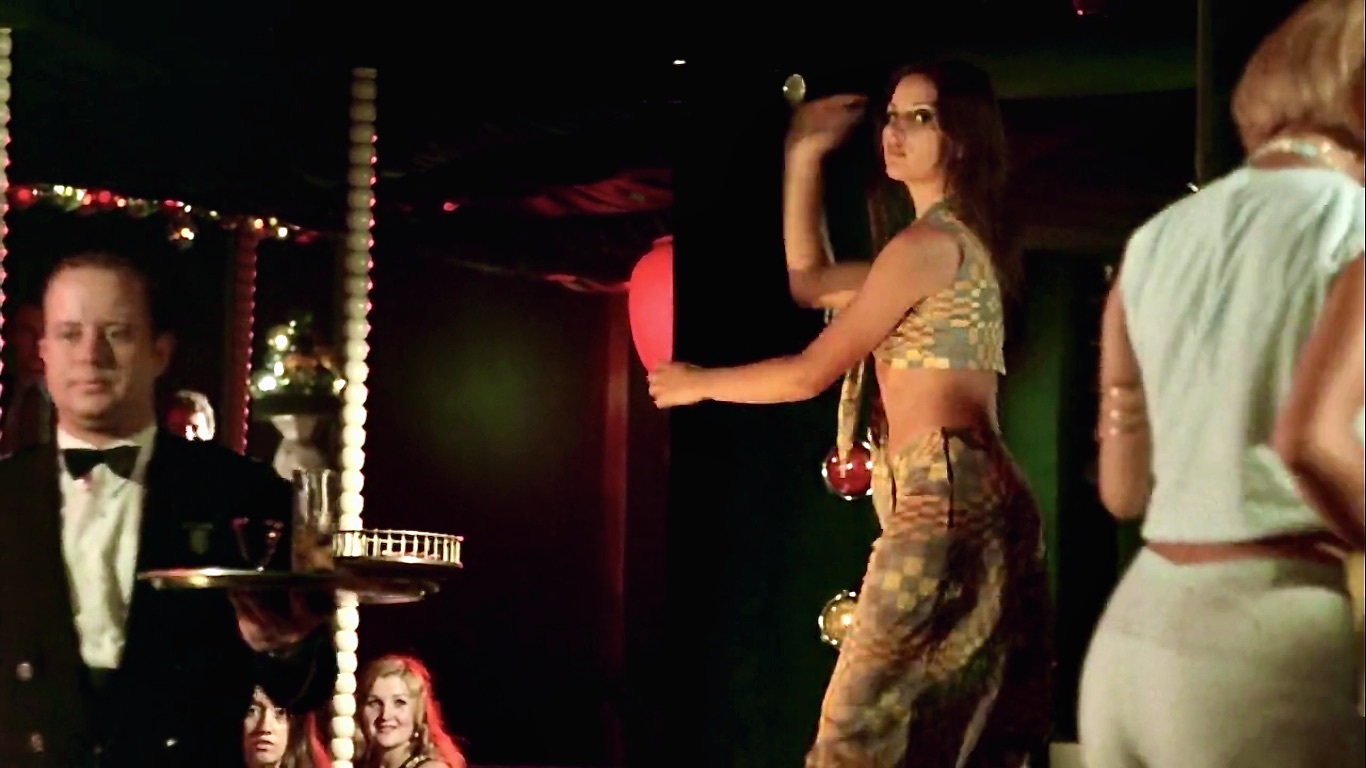
Late ‘60s fashion is on display in a nightclub scene, which showcases men dancing in printed shirts and slacks, and girls showing off mini skirts, midriff-baring tops, and flowing, flared pants. The stylish club crowd is dancing while drenched in kaleidoscopic lighting; flashes of fashion include a micro dress in animal print, a powder blue crop top and pants, a long embroidered vest, and a lace jumpsuit.
Fashion Reviews
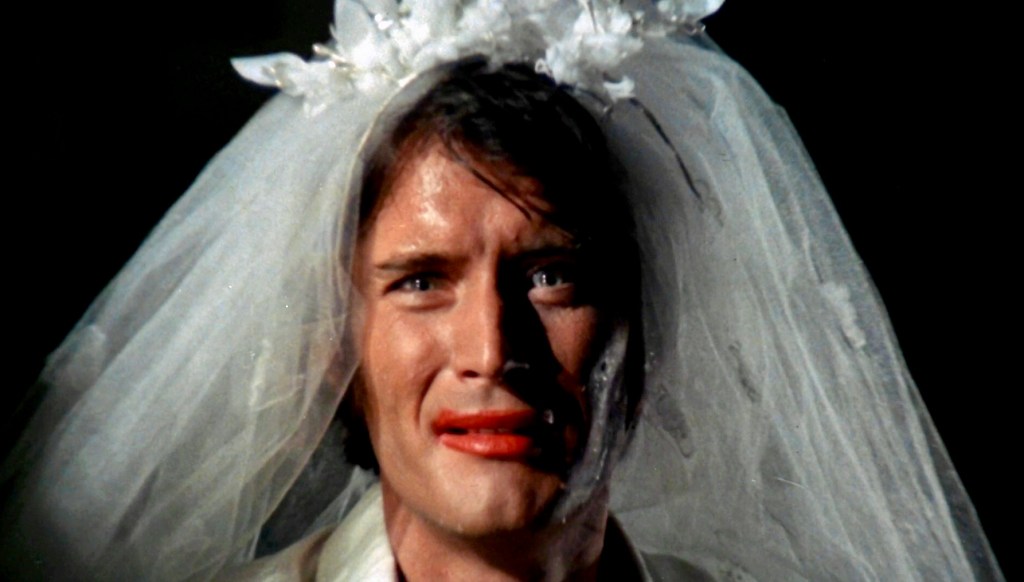

John
“When I’m working with a villain –in costuming– I think of, “Who does this person think they are? Who is that person trying to fool? What’s their game?” ~Isis Mussenden, Costume Designer. From “Dressed to Kill: Film, Crime, and Fashion”
HFTH’s villain and the first member of the fashion trifecta up for review will be John Harrington. Dashingly deceptive in his wardrobe, he mimics the ordinary man with a sense of Sprezzatura. Through his duplicitous and effortless style, he gives the impression of sanity and naturalness, instead of who he really is; an unhinged personality lurking beneath a fashionable tailored jacket and suggesting deception behind a mask of respectability.
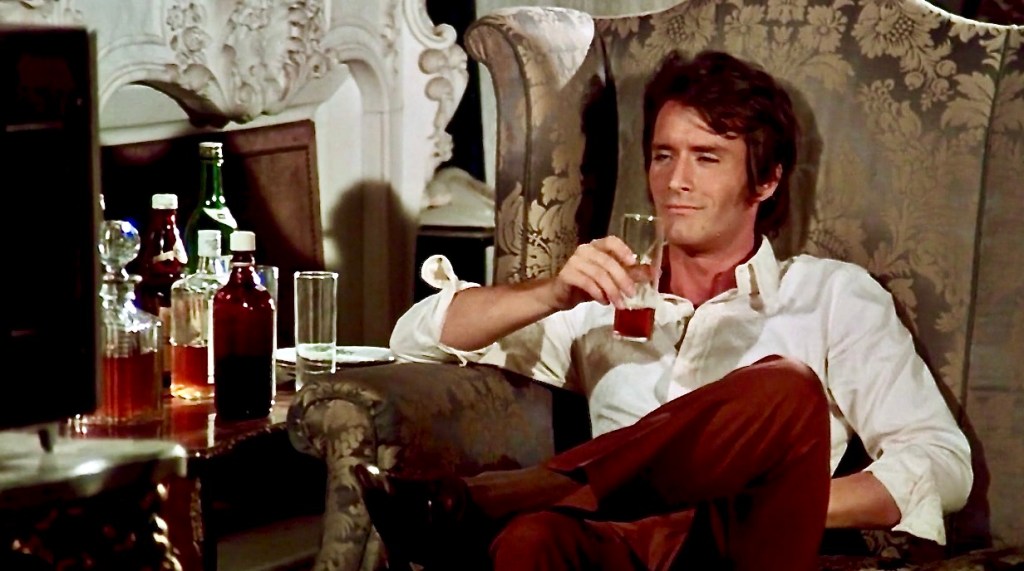
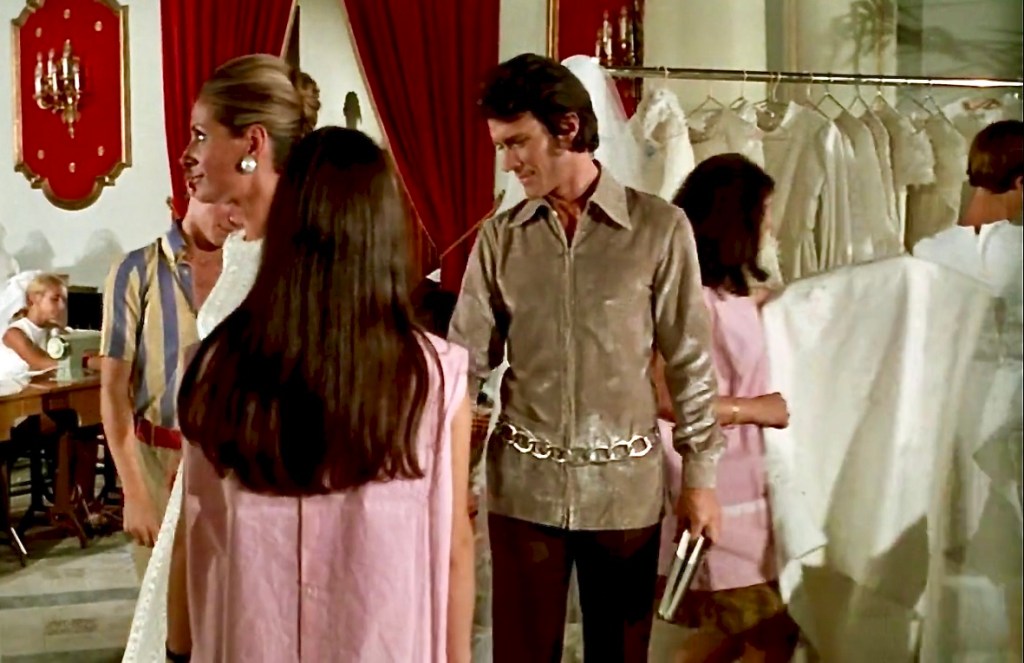
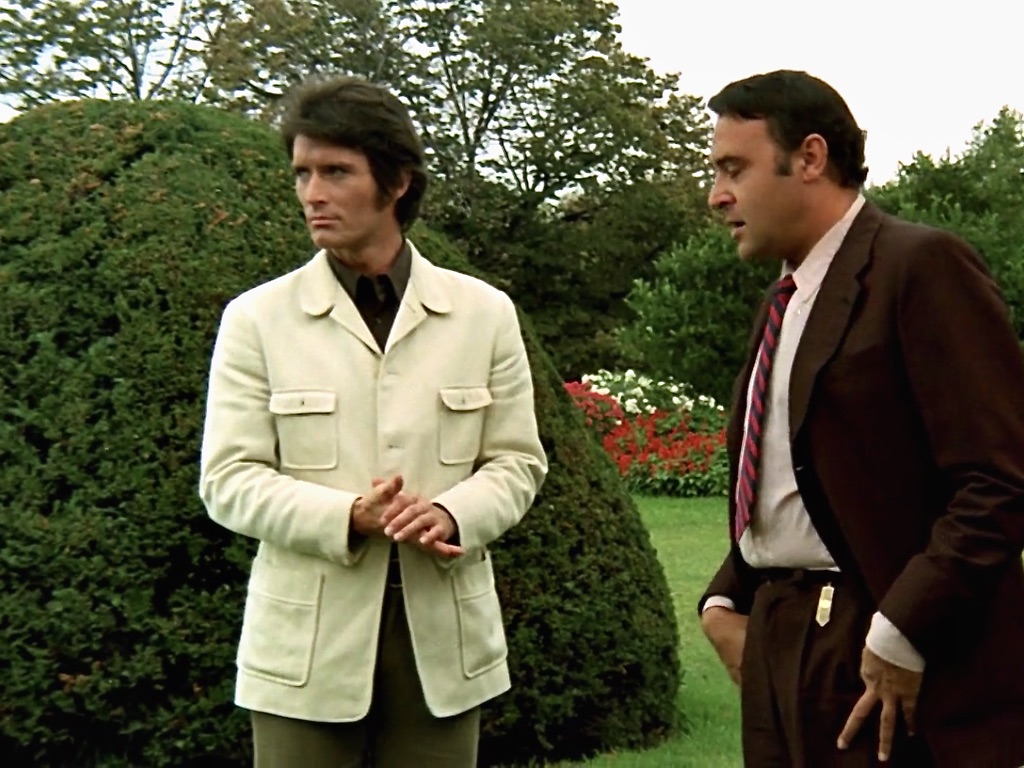
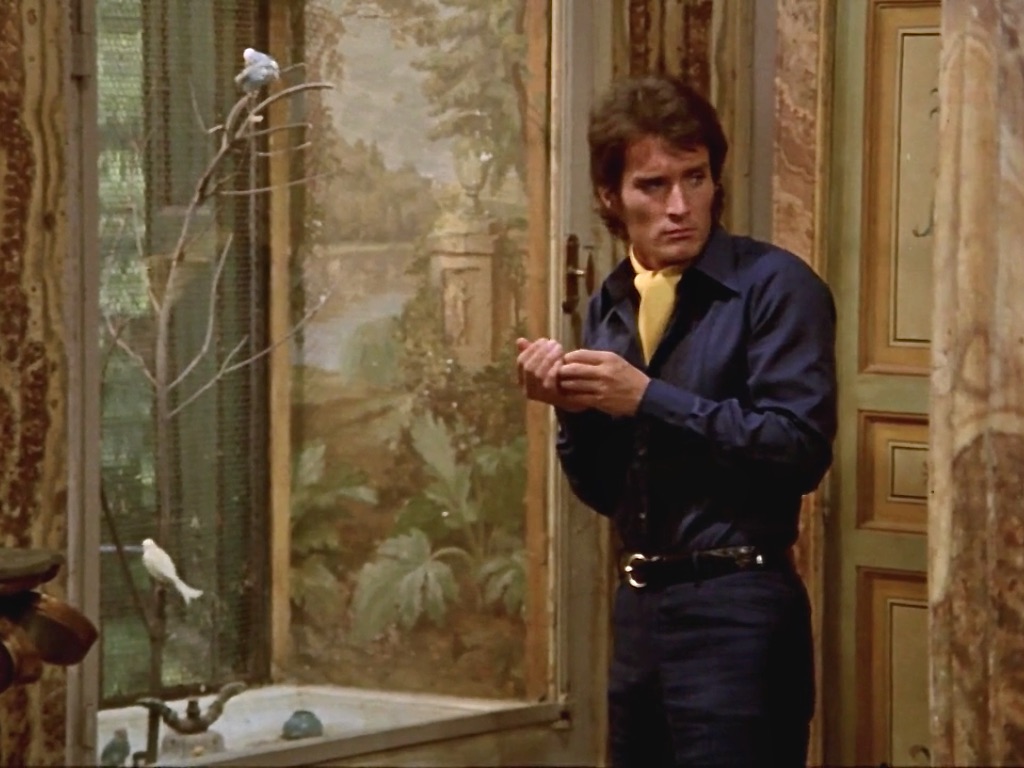
John’s 1960s take on Beau Brummell’s dandified style is comprised of impeccable tailoring, and high-quality materials, creating simple, flattering silhouettes. His wardrobe consists of casual to dapper looks; close-fitting Italian-style jackets, silk scarves twisted into cravats, belts worn over tunic tops, suits anchored by button-down shirts, and slim-fit pants. Like PEEPING TOM villain Mark Lewis, John is fond of matching neutral tones in browns & tans. For example, a sporty look like his hothouse outfit, with its light-colored corduroy jacket and functional pockets, dark chocolate-brown shirt, and khaki-colored pants speaks to utilitarian simplicity and working man elegance.
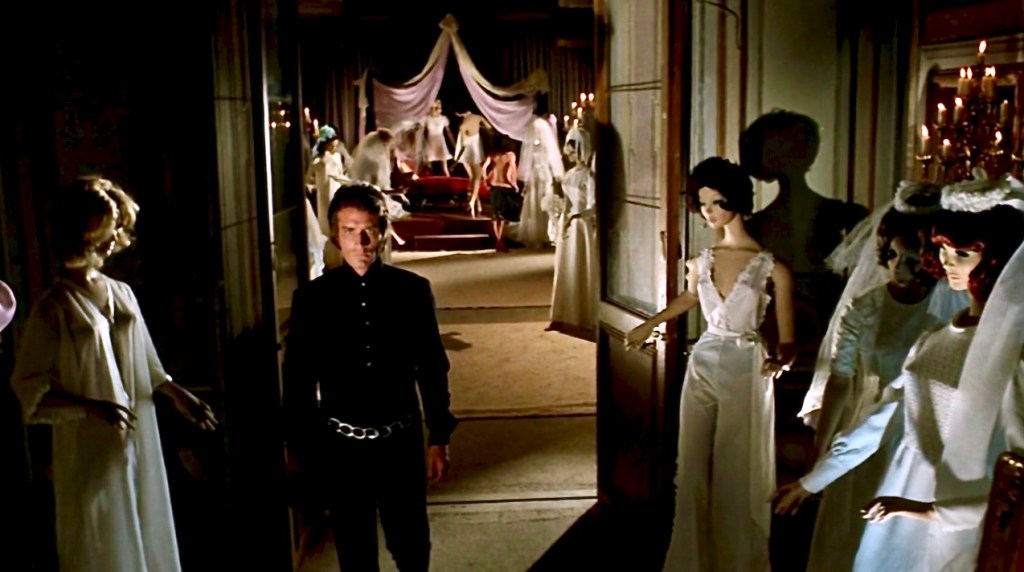
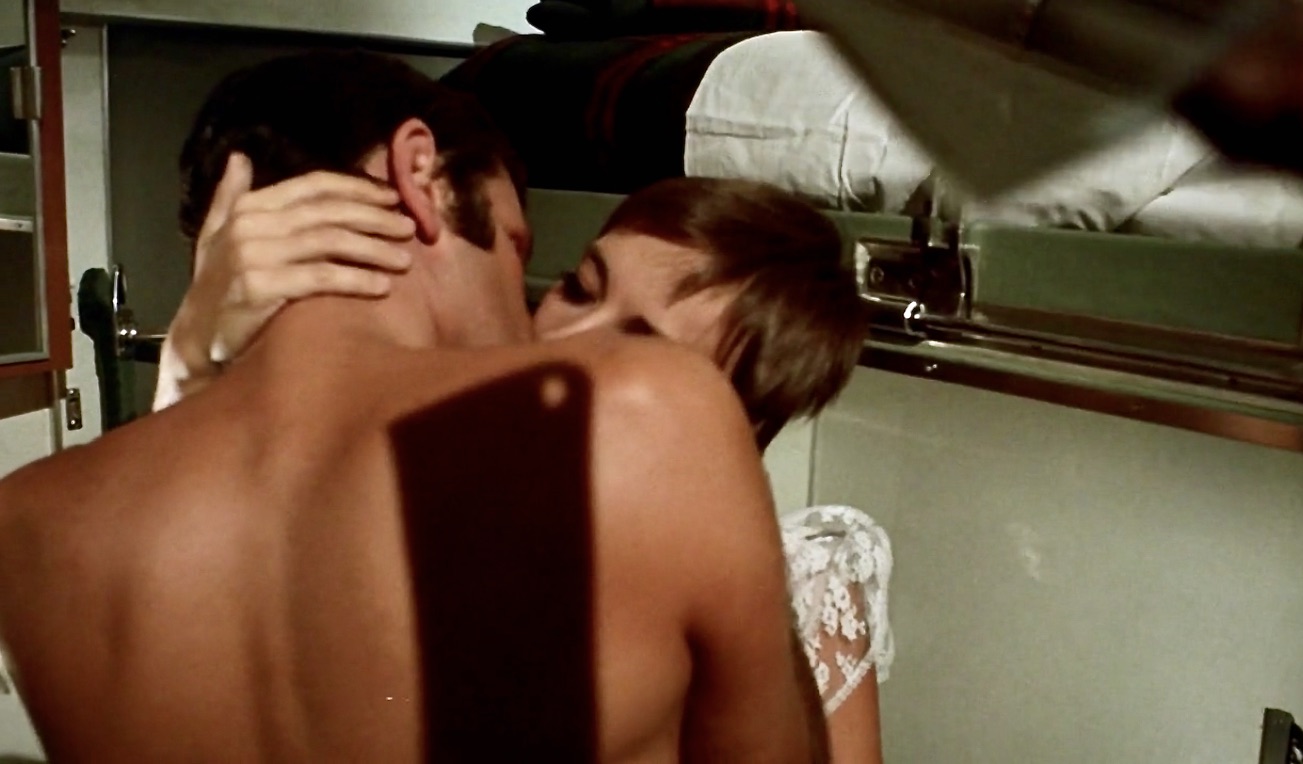
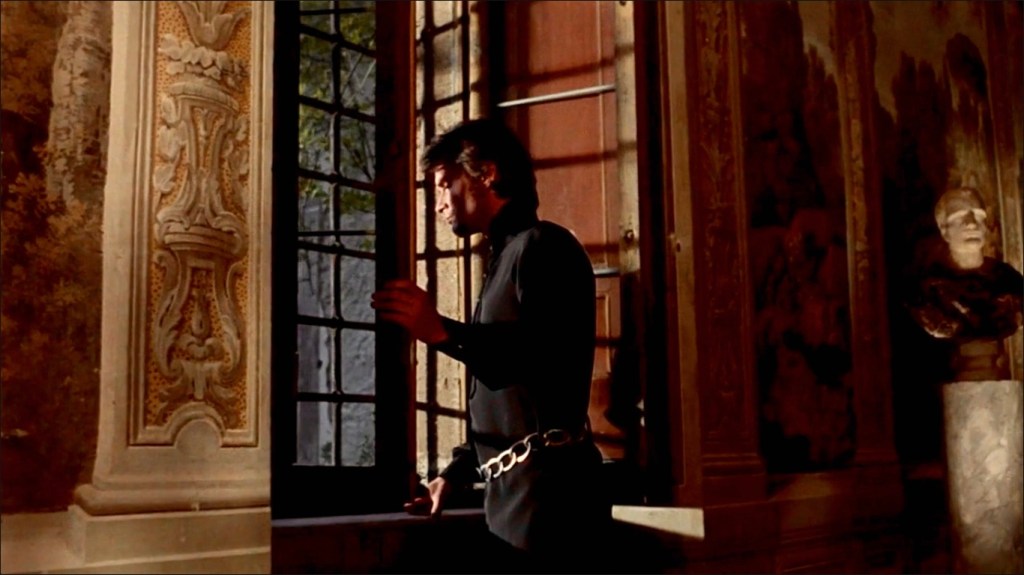
John’s signature look is immediately seen at the beginning of the film when he murders a honeymooning couple on a sleeper car train (HFTH set costumer Montserrat Riba Vidal plays the role of the hapless bride). He wears a black Mandarin-collared Nehru tunic jacket -a style that was popular for the times- with a slightly flared pair of trousers. The military-inspired jacket is an interesting choice, considering other villainous movie characters have donned the Nehru jacket style, i.e., the Imperial officer’s uniform from the Star Wars movies and Austin Powers’ Dr. Evil. Tying the outfit together is a heavy-duty silver chain-link belt draped around his waist. It’s a serious-looking piece of hardware that could even serve as a second murder weapon, next to his main accessory; the hatchet. Curiously, his outfit doesn’t include black gloves, per the traditional Giallo. He doesn’t seem too concerned about leaving DNA evidence behind either.
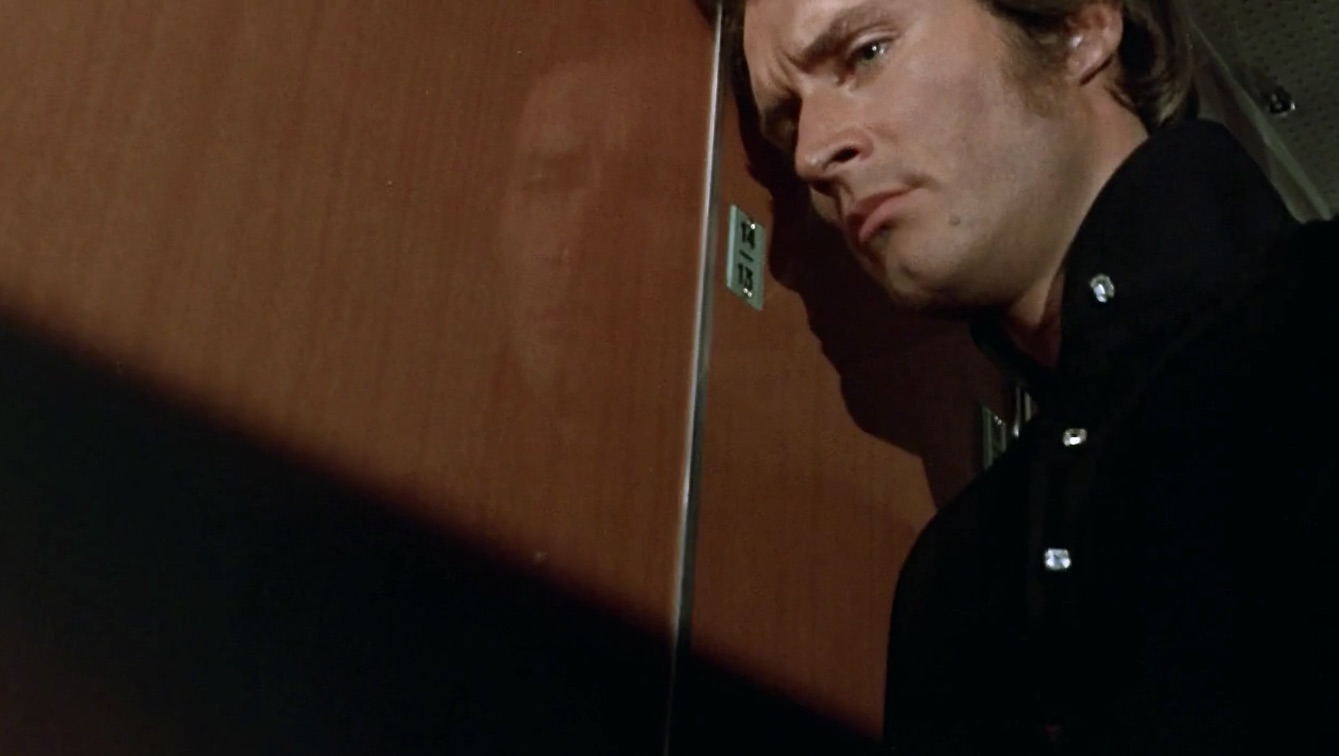
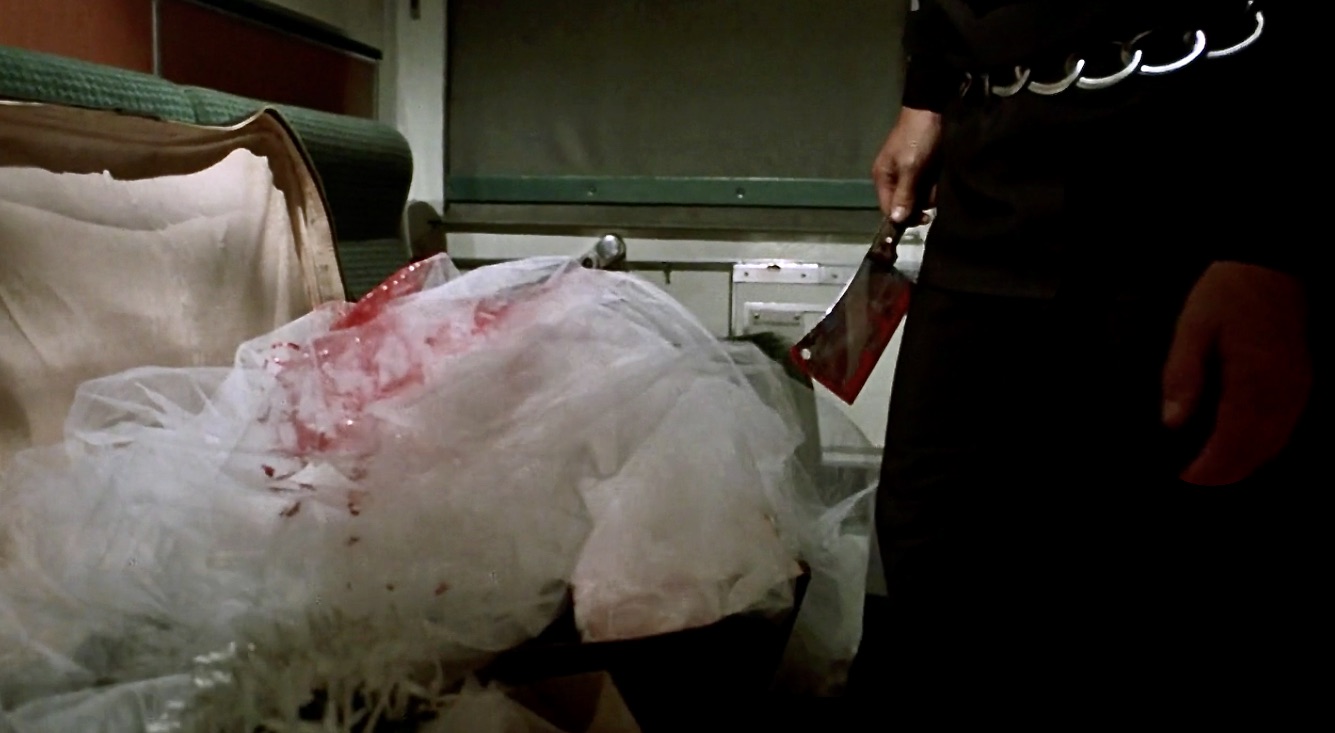
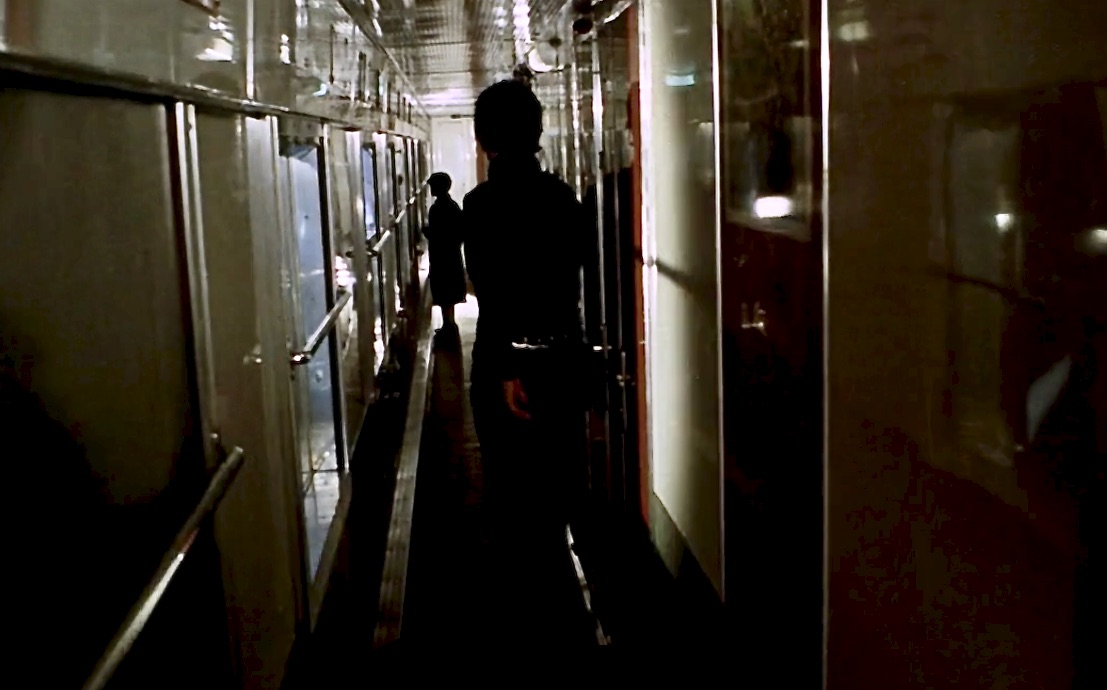
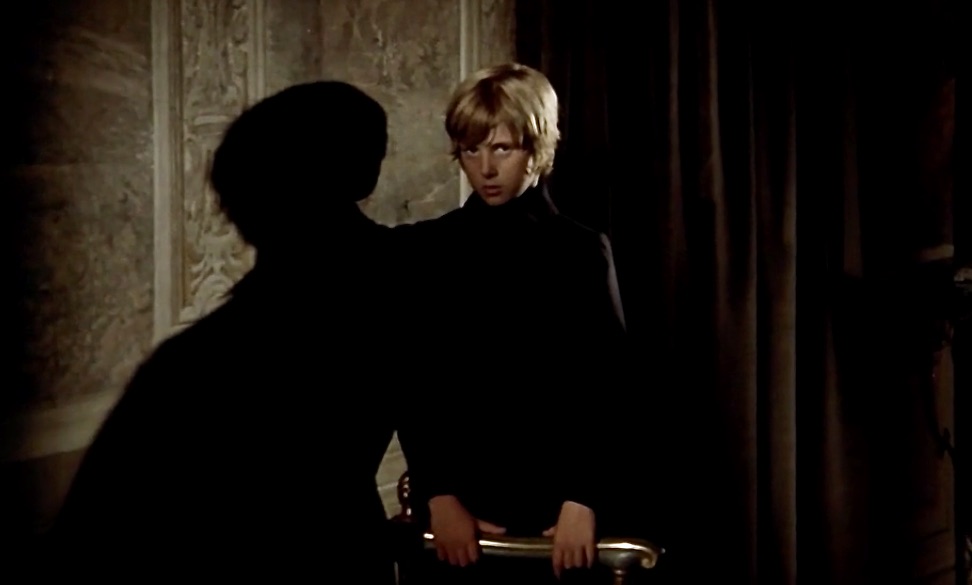
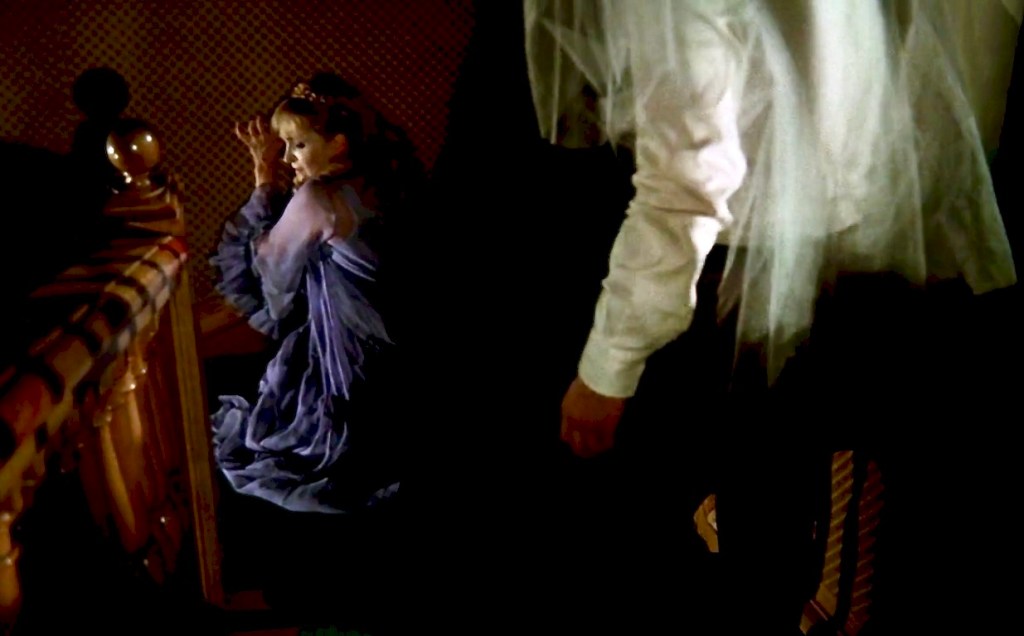
John’s younger self -portrayed by Pasquale Fortunato- also dresses in black, apart from a pair of white knee socks. He appears as a specter from his ID throughout the film, dressed in a shin-length black wool coat and carrying fragments of murder memories.
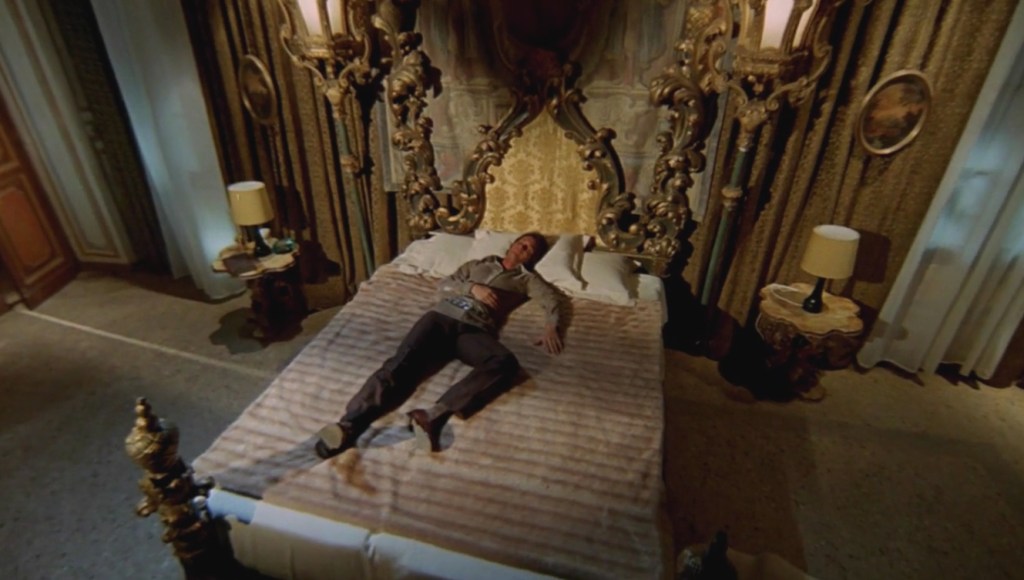
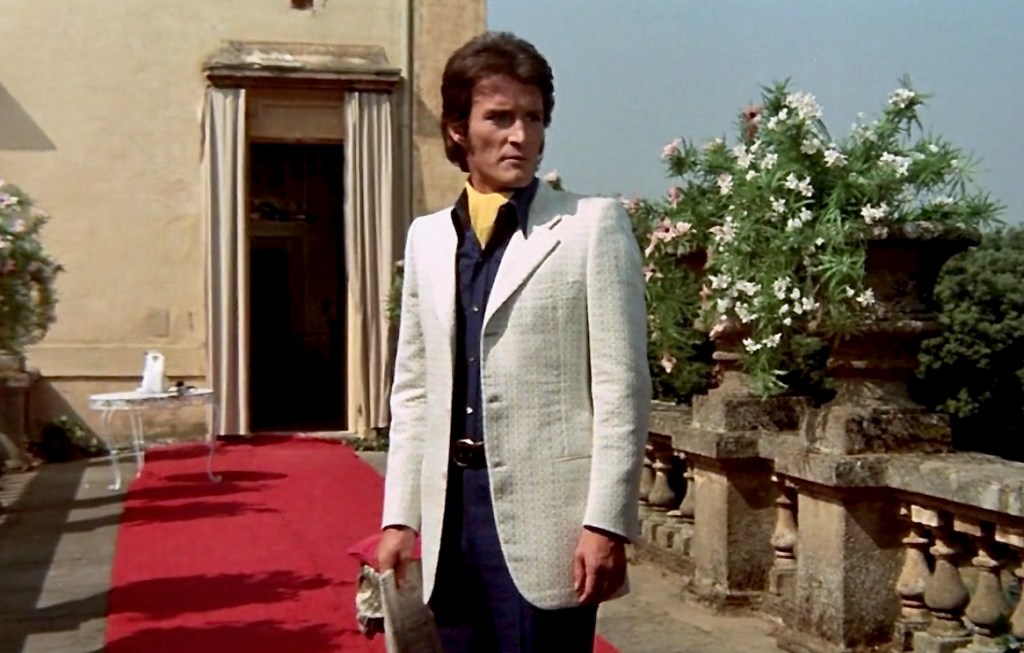
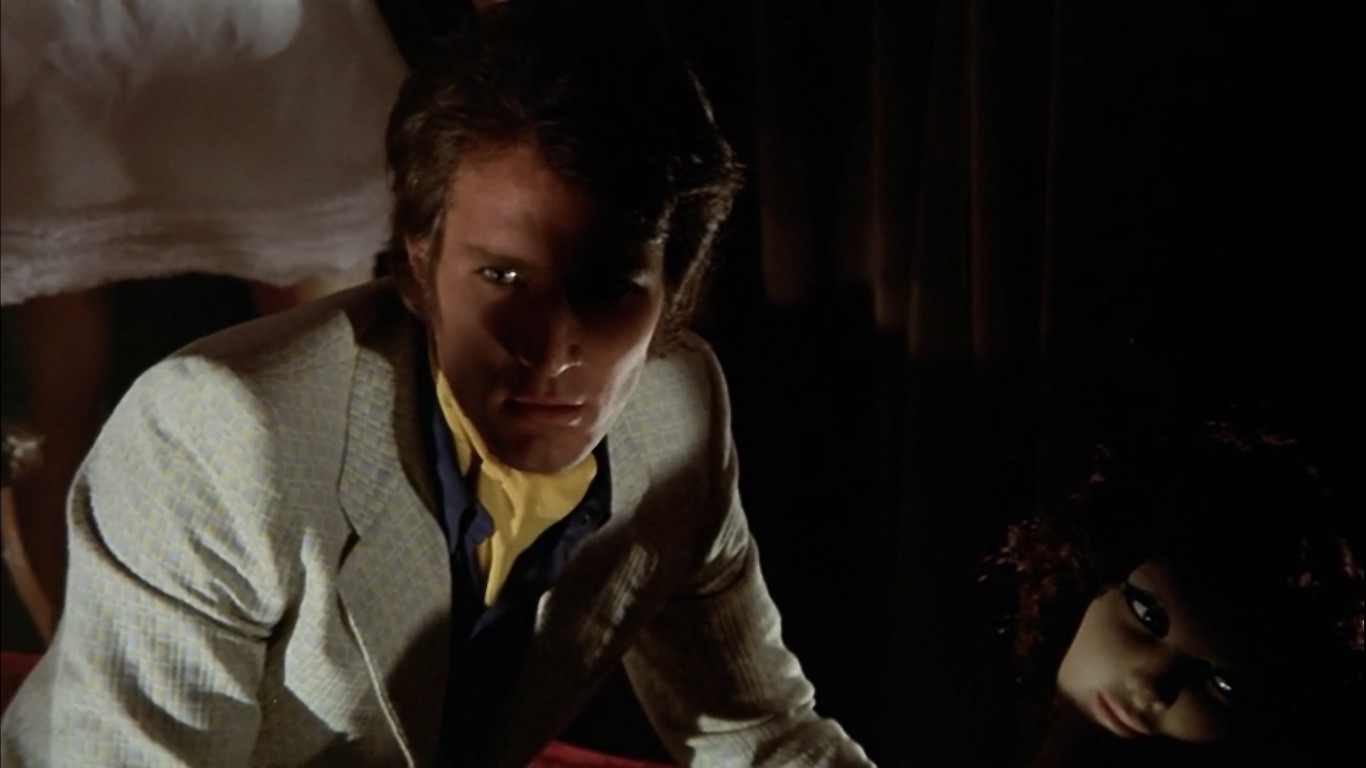
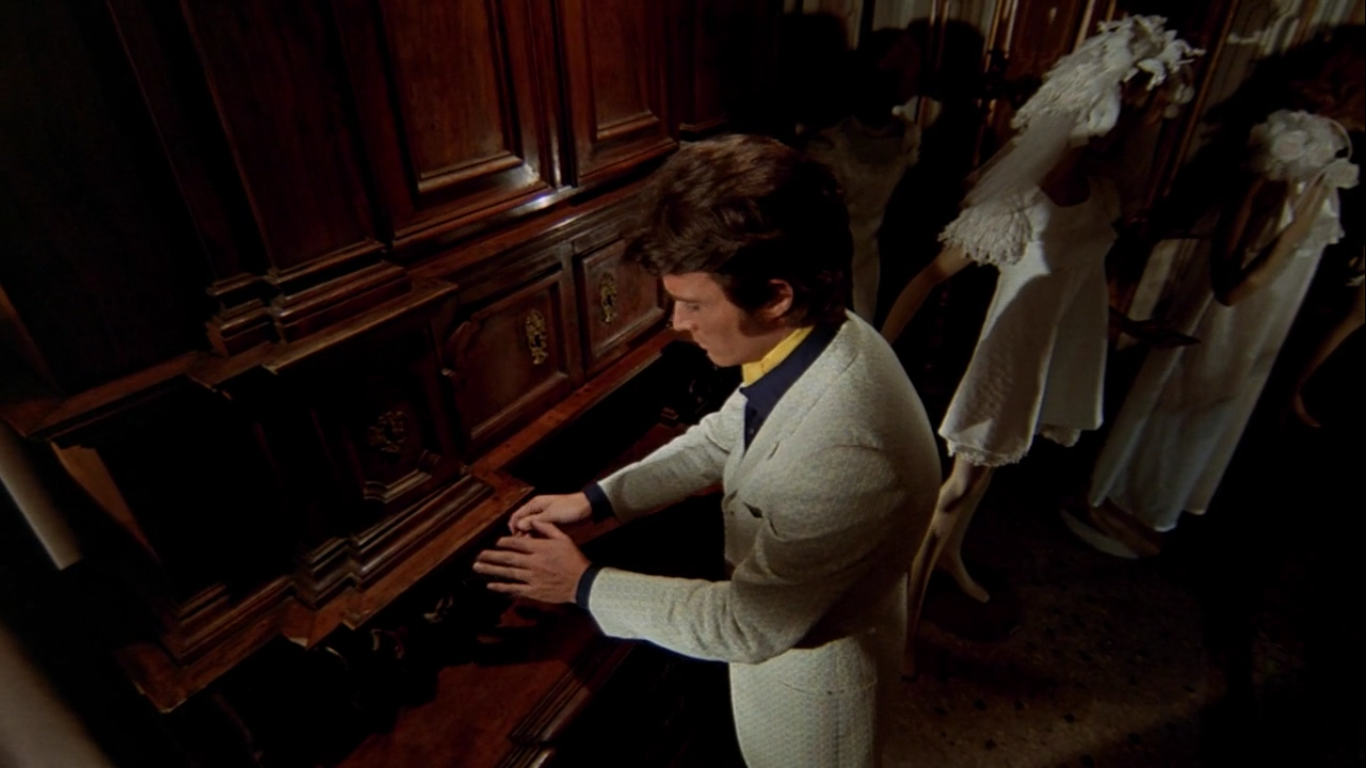
In contrast to his sinister appearance at night, John wears a sophisticated look for breakfast the next morning. Rather than wear a tie (too basic), his open shirt collar reveals an elegant yellow day cravat that coordinates with his blue and yellow small check patterned jacket. The sports jacket with its Roman shoulder construction, open weave fabric, shoulder padding, and flapless pockets gives the jacket structure to John’s slim build and narrow shoulders. Underneath the jacket is a button-down shirt made of a luxe navy blue satin fabric paired with navy pants; contrasting the black night-time look with monochromes during the daytime. It is a stylish and relaxed outfit, reflecting the spring/summer spirit of southern Italy. Who would suspect an unhinged individual beneath such a civilized outfit?

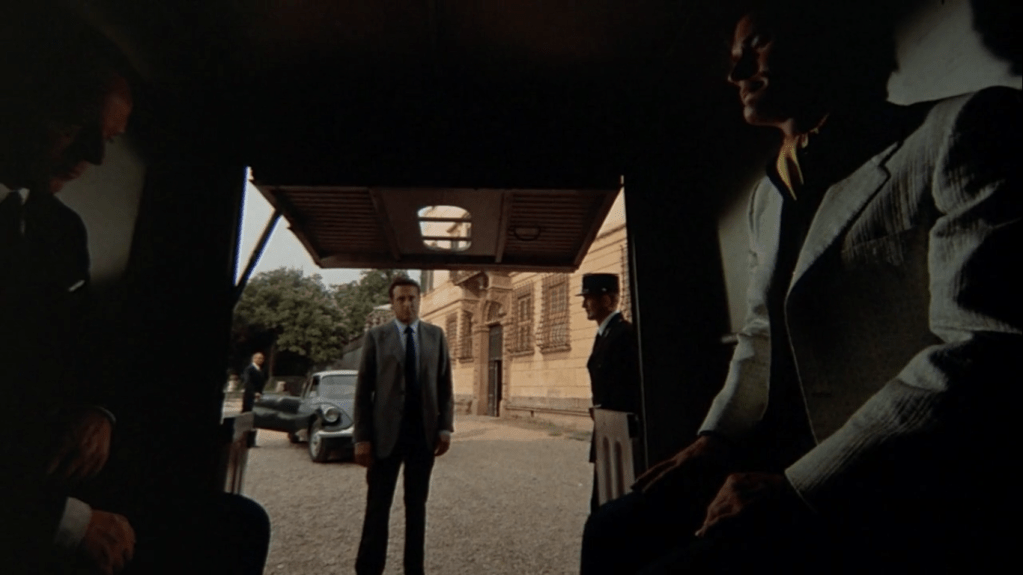
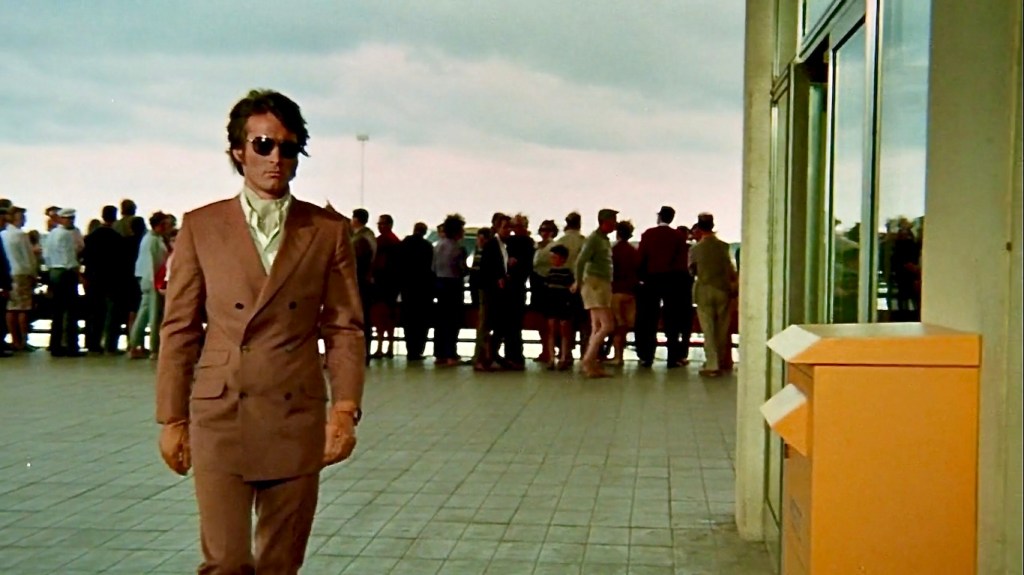
In the 60s, dressing to the nines for airline travel was a thing and for John, the act of driving Mildred to the airport was not an exception. To see Mildred off, John wore a saddle-tan double-breasted suit and matching leather gloves. Flap front pockets and a ticket or hacking pocket make the suit jacket very British. Later, John reveals that he is wearing brown leather whole-cut monk-strap shoes with this airport ensemble.
John’s ghoulish wedding drag get-up is his most crazy and frightening look. He dons a veil and smears on some red lipstick to launch a demented hatchet attack against Mildred; an act that he assumes will end their unhappy marriage.
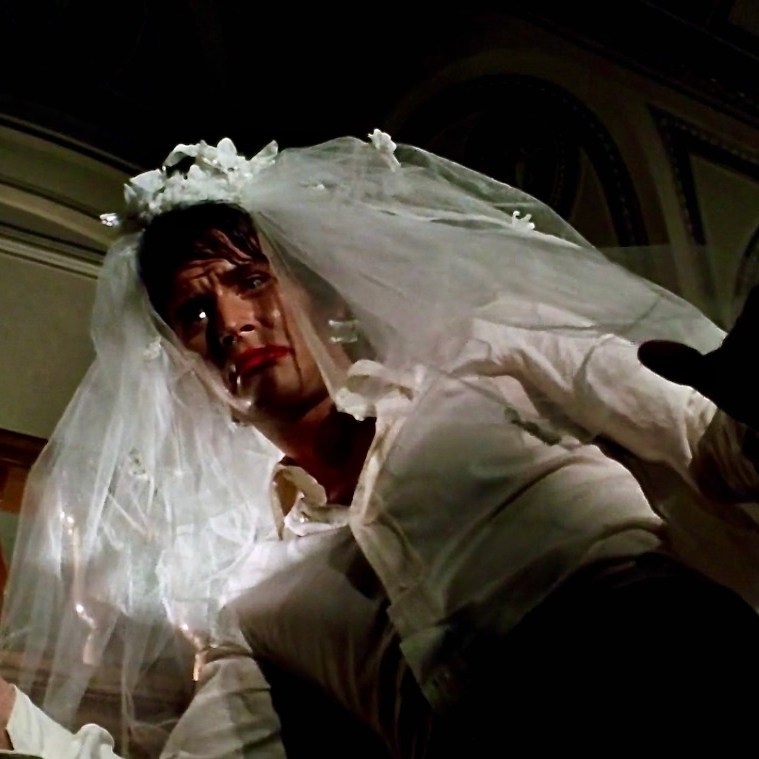
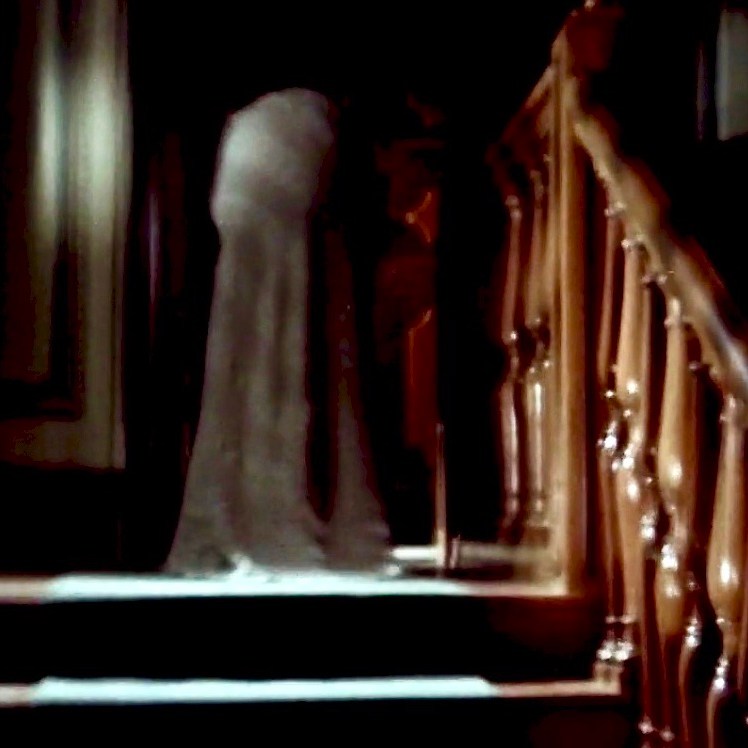
Left photo: John’s partial wedding drag look. Center & right photo: Young John flashes back to an earlier attack on his mother, wrapped in a white blanket that emulates a long bridal veil. He trails it behind him on his way up the stairs to his mother’s bedroom.
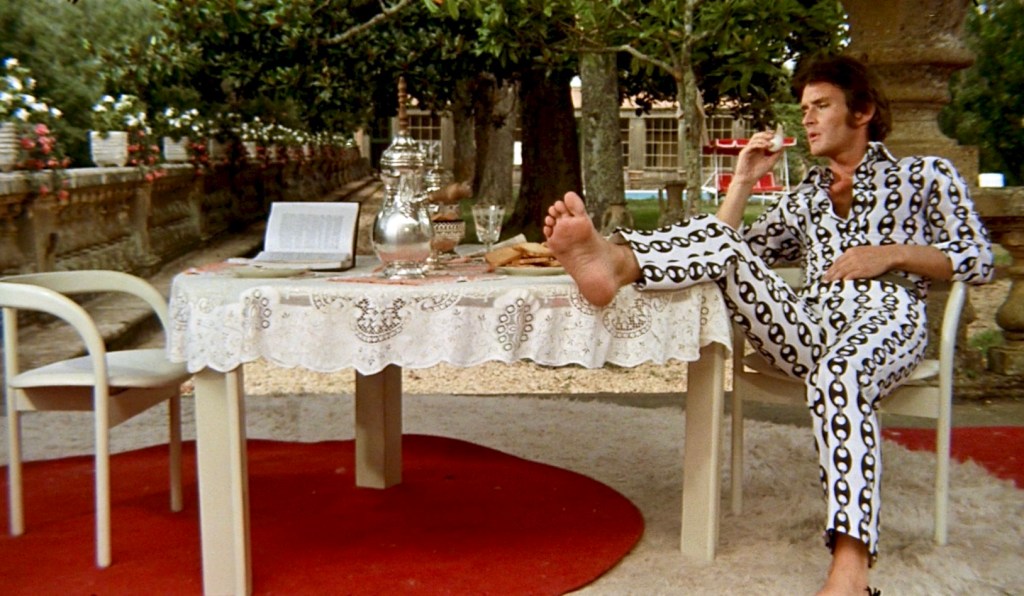
After hacking his wife to death, John shows up to breakfast the next morning barefoot and wearing what appears to be a wild pair of logoed pajamas. However, the pants are belted. The top and pants are white with an in-your-face black chain link pattern that emulates his favorite murder belt. A ghostly Mildred turns up in her seance look in this scene –though John can’t see her yet– smirking at John’s rather over-the-top, elegantly bohemian PJs.
Mildred
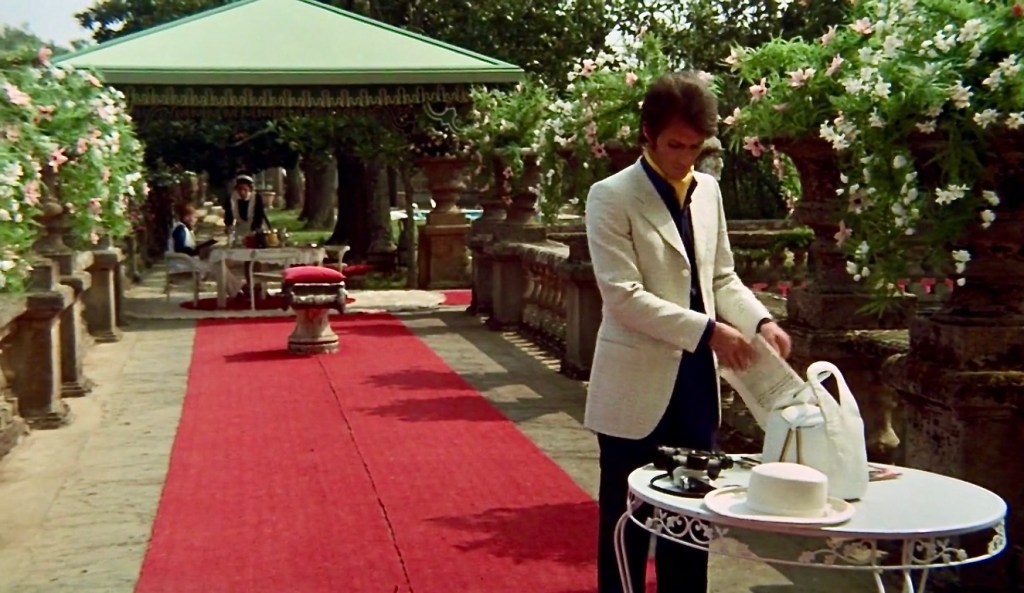
Next up for review is John’s disgruntled wife, Mildred. First seen seated at the breakfast table, the current fashion matron of Harrington House is reading “Mediums and Spiritism”. Mildred Harrington’s idea of power dressing is a mix of edge, elegance, and feminized masculine shapes. She pre-dates Saturday Night Fever, dressed in a Tony Manero-like 3-piece snow-white suit that is made with fabric more luxurious than polyester. Her pre-disco look also includes a waistcoat and a darkblue silk shirt. Though only the top half of her outfit is visible during most of the scene, you can spy her lower half in a long shot, which appears to be clad in wide-legged light-colored pants. A white bag and hat finish off her fabulous day look, displayed on a side table next to John’s binoculars and morning newspaper.
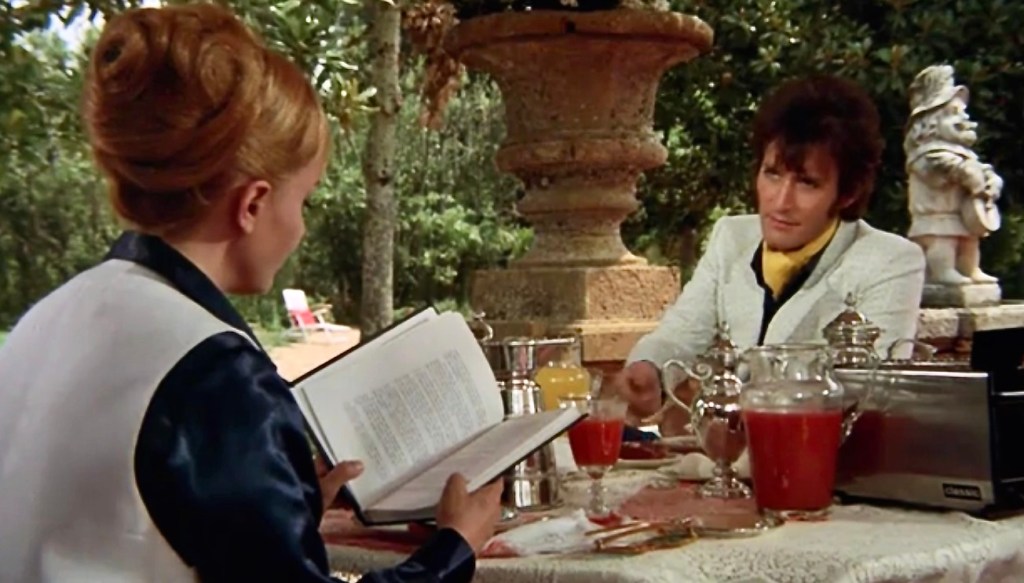

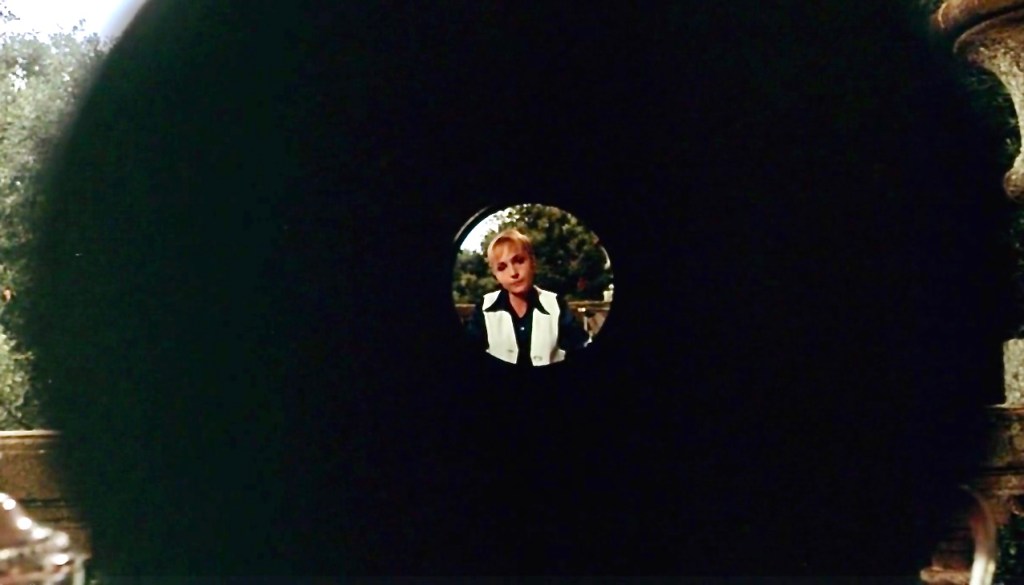
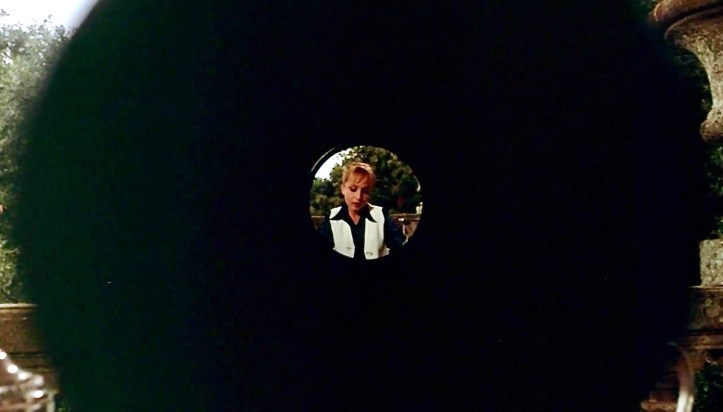
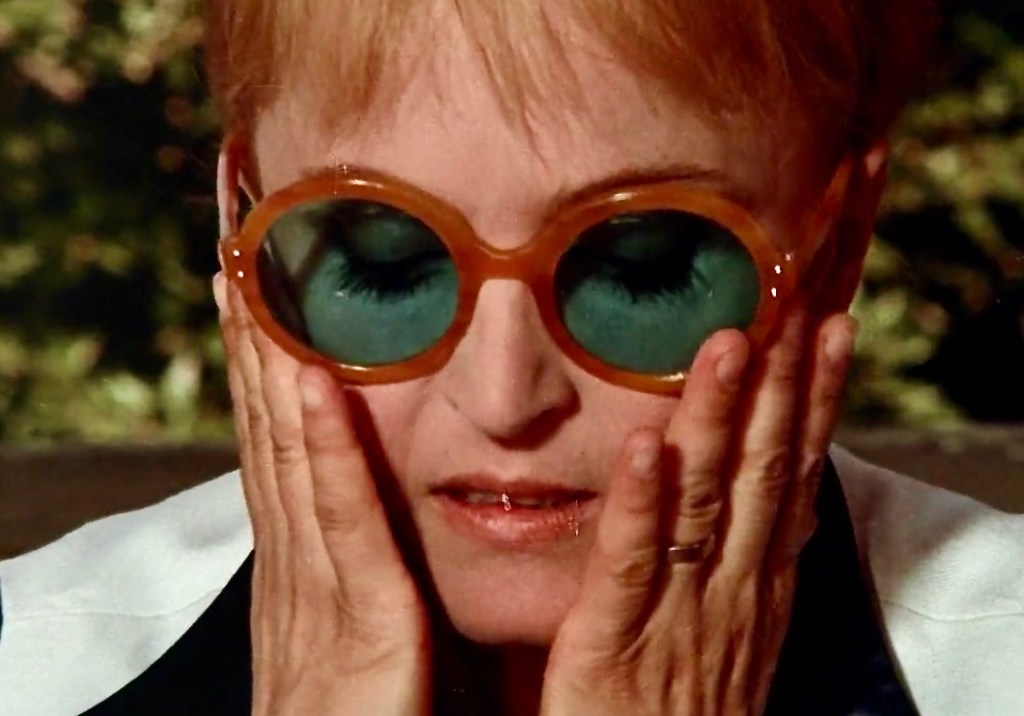
Breaking from reading her book to snipe at John, Mildred shows him just who wears the pants in the relationship by holding her wealth over his head and denying him what he wants – a divorce. John storms off and Mildred is dejected, whipping out a pair of granny-frame sunglasses, which she puts on with chagrin. Mildred’s outfits from now on are feminine, flowing robes & gowns, the opposite of her introductory appearance.
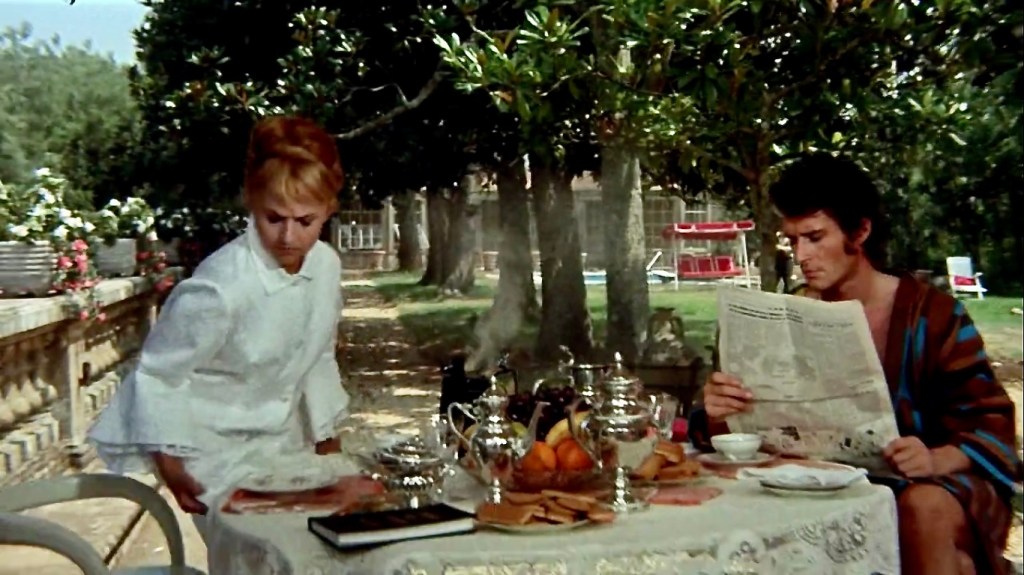
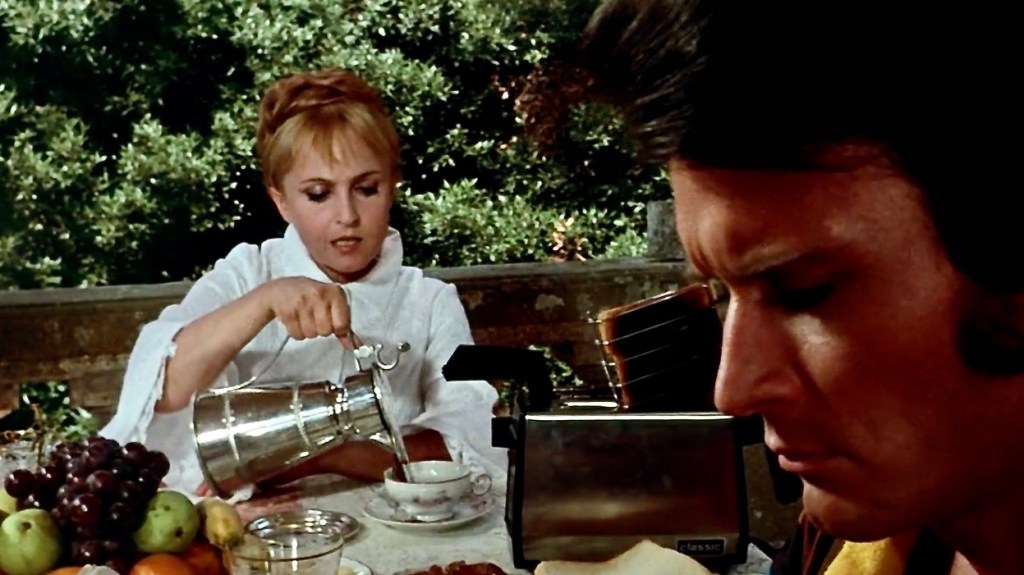
In a different breakfast scene, for example, Mildred is dressed in a floral matelassé white button-down dressing gown with lace-trimmed bell sleeves that give it a touch of flair. The stark white stands in contrast to John’s earthy color scheme in a teal & caramel striped satin robe.

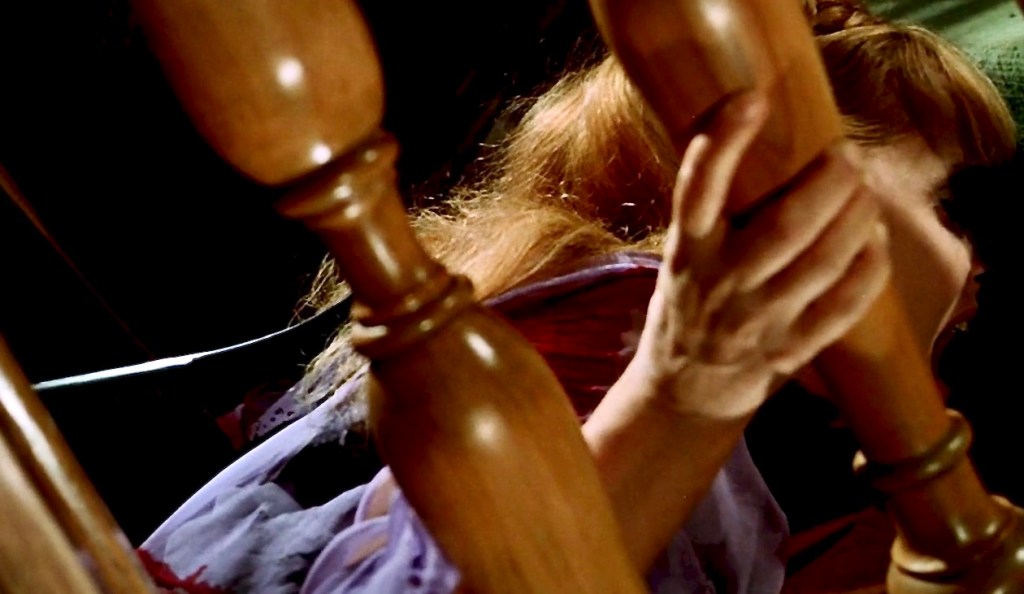
Another notable look by Mildred is her purple sheer negligee with a ruffled neck and sleeves. This regal purple number with a flyaway front is worn with a nightgown in a lighter shade of violet slip underneath. Unfortunately, poor Mildred catches the sharp edge of John’s hatchet blade while wearing this gorgeous ensemble. It is later seen, in the hothouse, in a crumpled state & half-buried in the dirt (lying in death, like its former owner) as John disposes of the body in the furnace. The story takes a supernatural turn from here with Mildred appearing after her murder in the purple nightclothes she was killed in, swearing to haunt John for all eternity. In her post-mortem scenes, Mildred wears either a black sequined cape or a brown leather doctor’s bag, which John uses to transport her ashes.
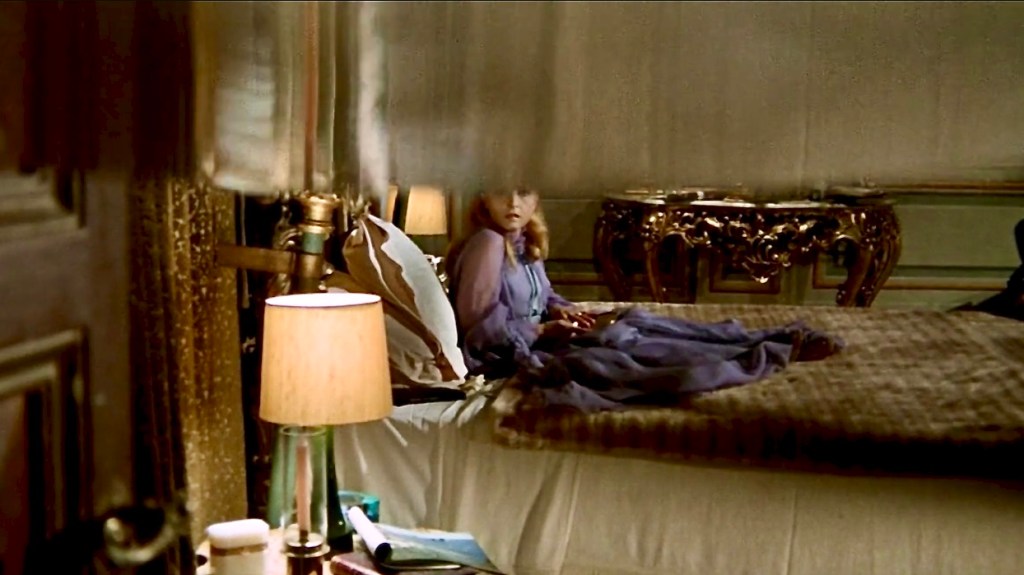
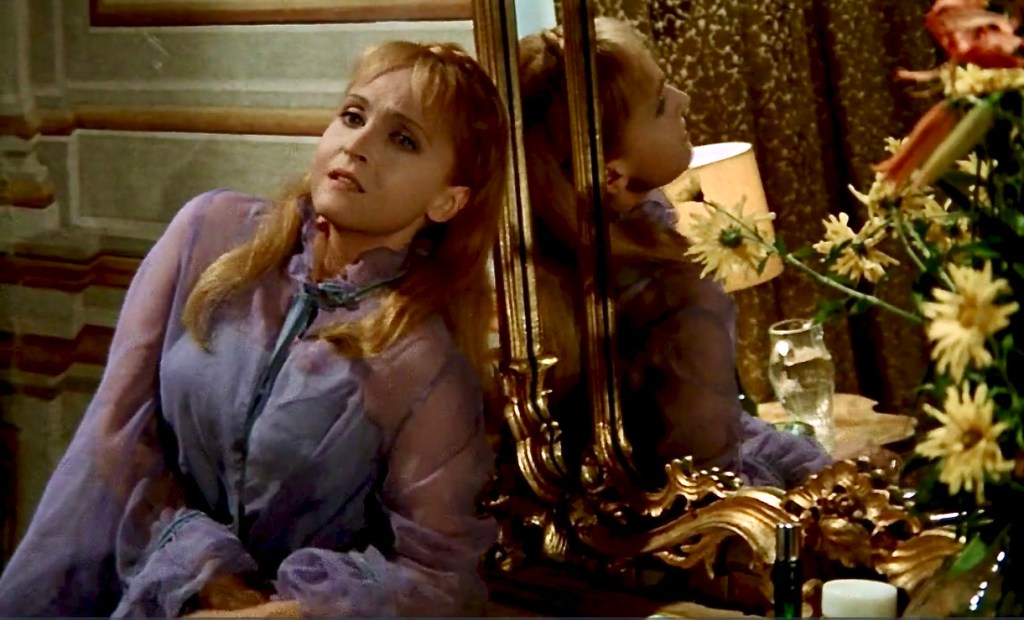
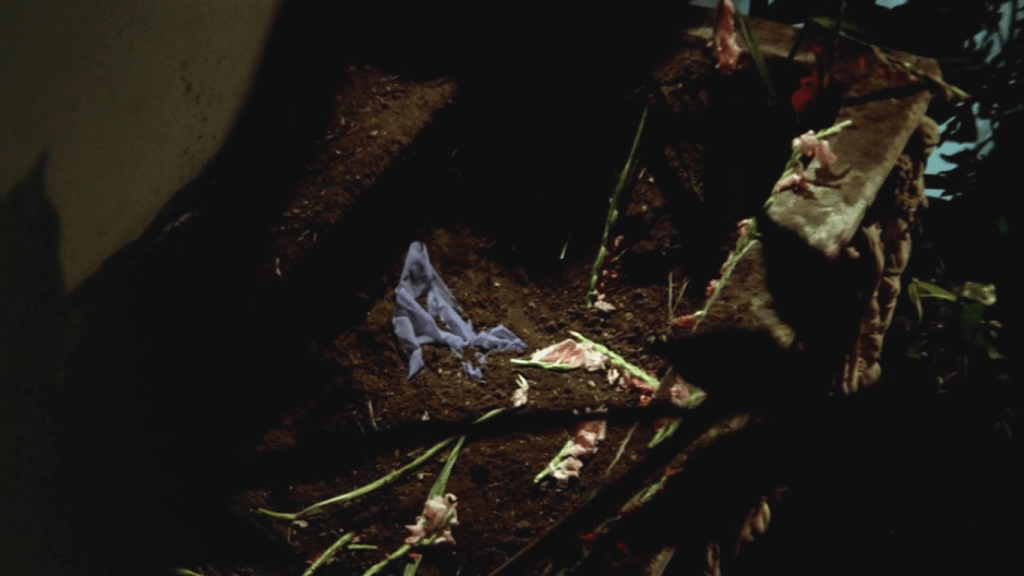
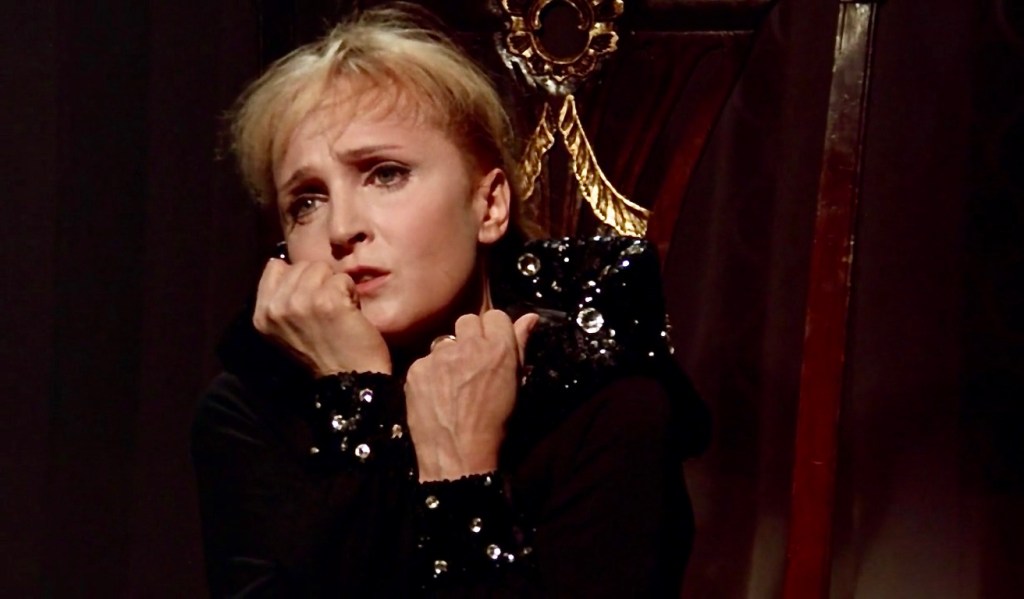
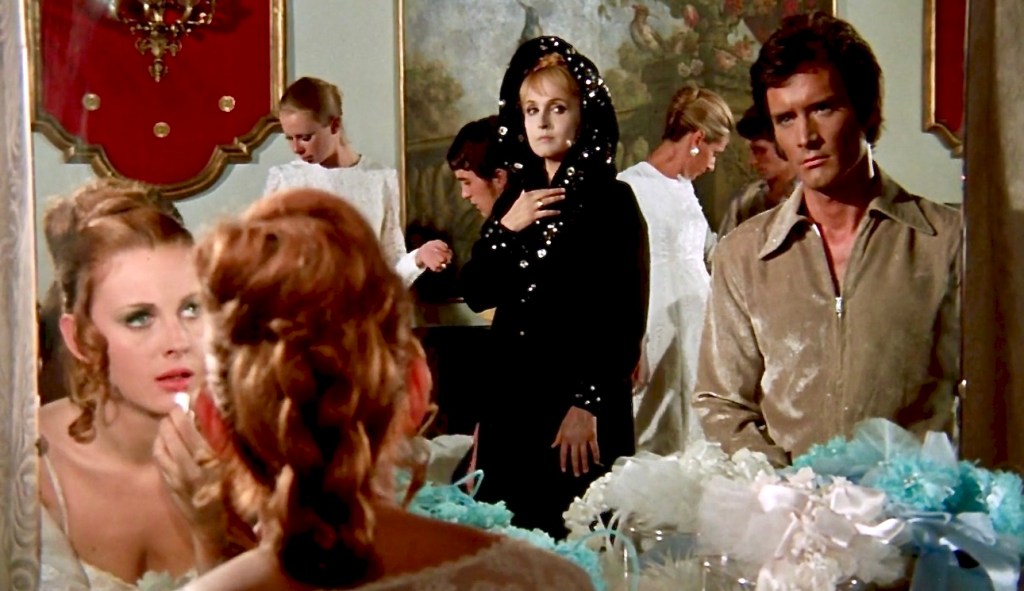
From this moment on, the audience and a few select characters see Mildred in a black sequined cape or as ashes in a brown leather doctor’s bag. She is seen wearing this sparkled high fashion hood in an earlier seance scene. The cowled garment is a dramatic piece, made of sequined black fabric with large white crystals embellishing the hood and cuffs.


Helen
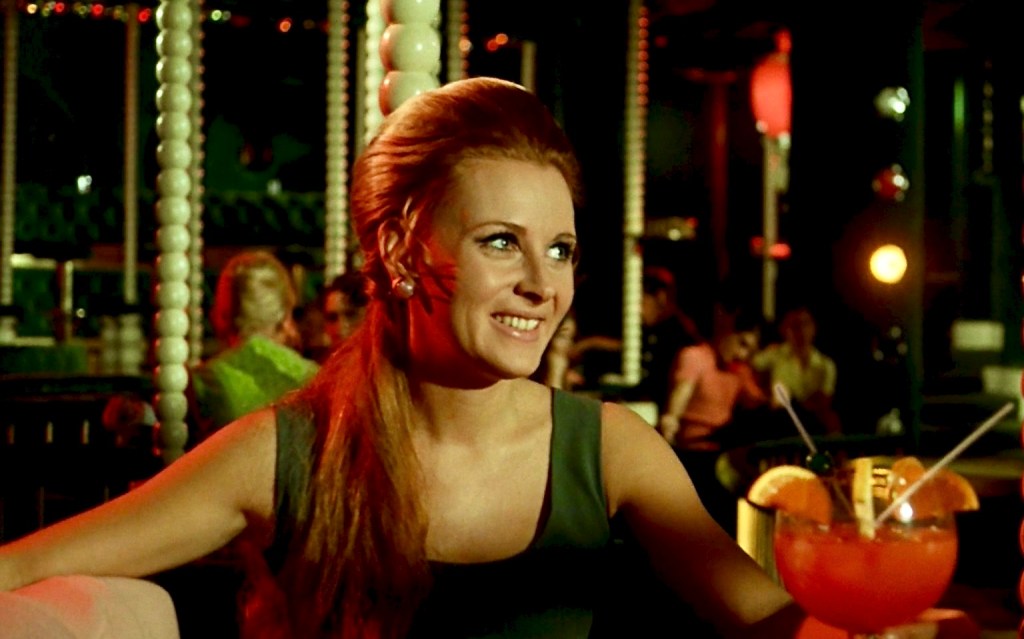
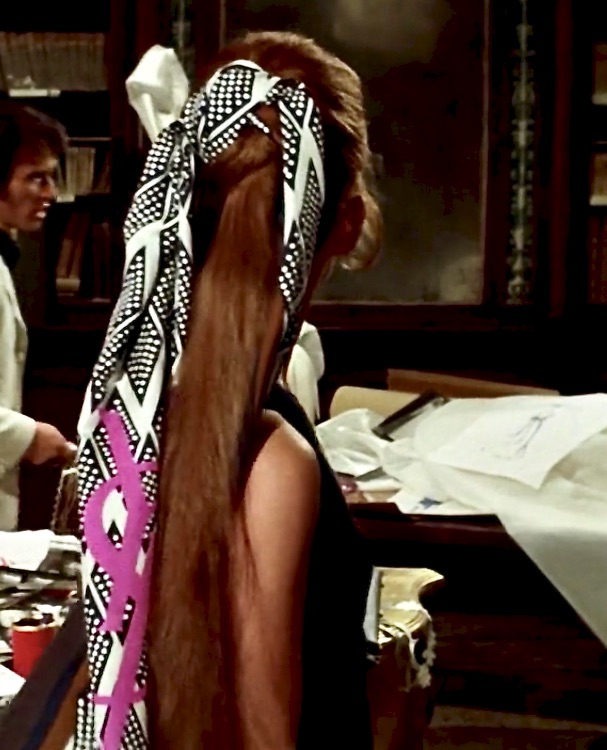
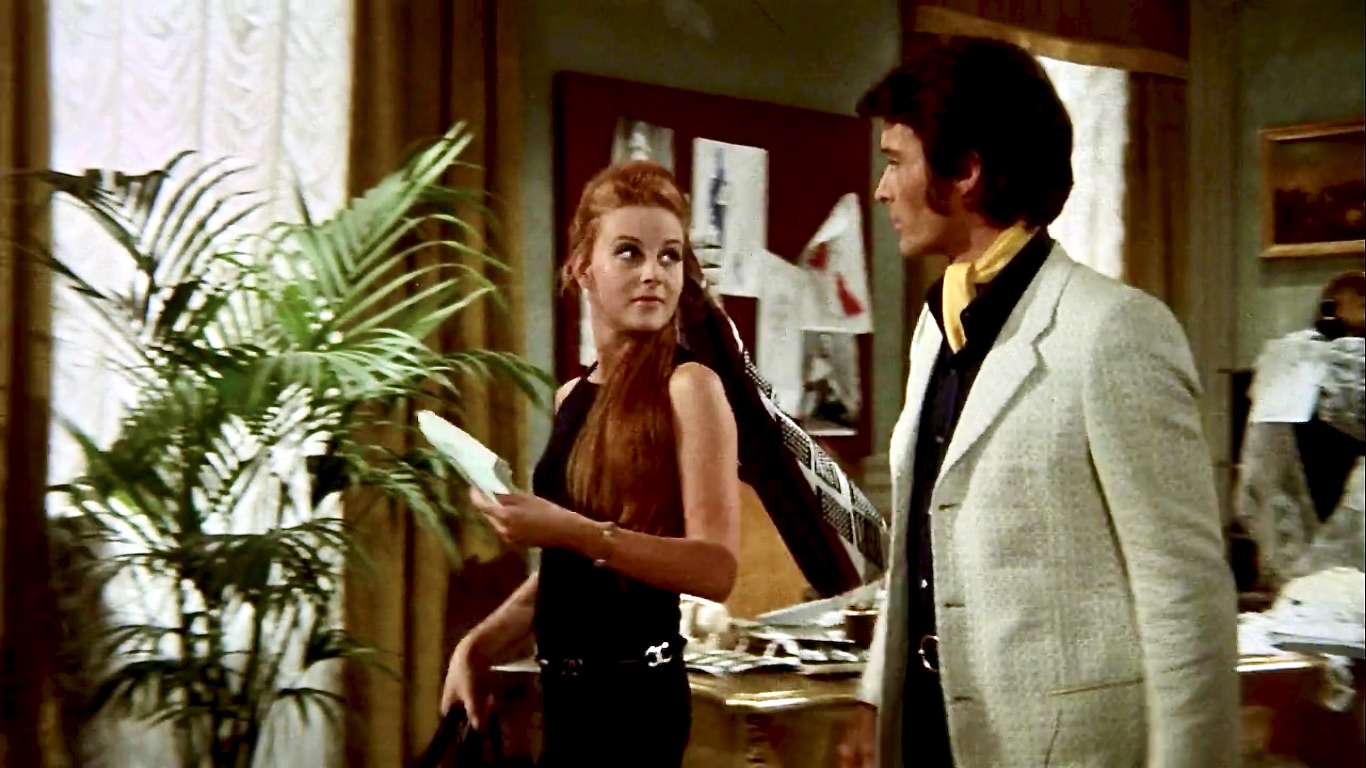
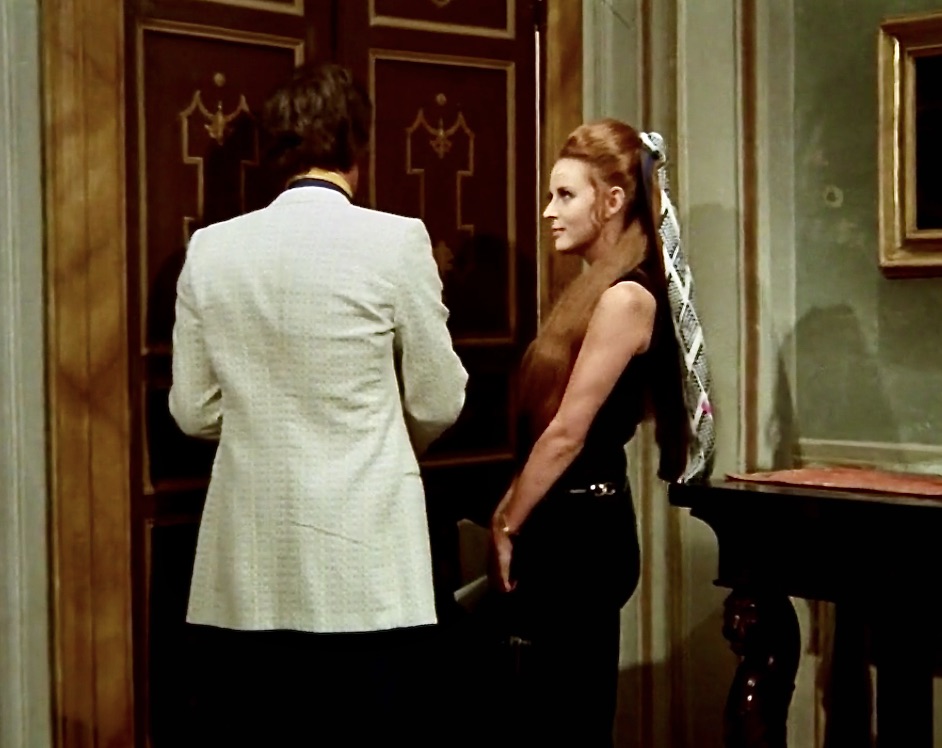
When we first see Helen, she is in John’s office for an interview wearing an outfit that appears to be a sister look to his murder outfit; a round-necked black tank top jumpsuit with a silver chain belt around her waist. As John presses her with questions about her modeling experience, it almost seems as though she’s on to him, even if she couldn’t possibly know what he wore during his murderous activities the night before. She flits around his office fiddling with design sketches, stray fabric, and passementerie trim. The hot pink YSL monogram on the black and white diamond print scarf wrapped around her long red ponytail is the only splash of color in Helen’s outfit.


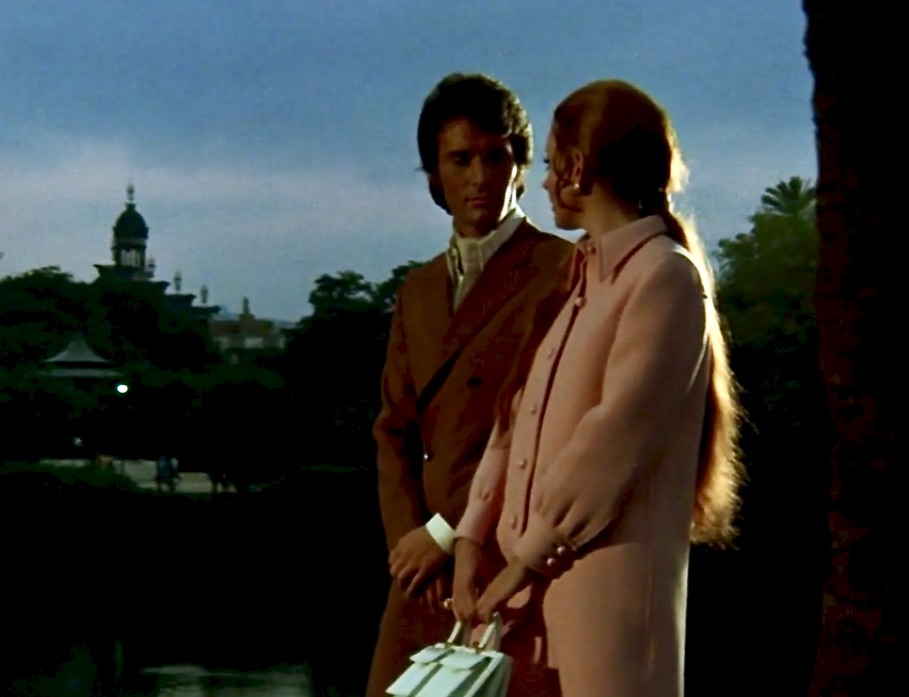
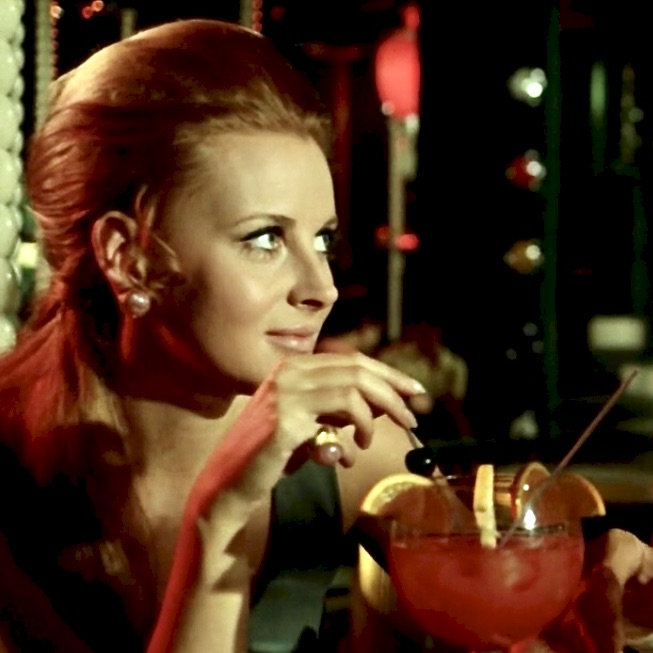
There is a mix of mod and ingenuity in Helen’s style throughout the rest of the film. Her fashion choices are representative of women’s fashion at the time. They include the jumpsuit mentioned earlier and other trends like high hemlines, funky prints, and edible colors such as cotton candy pink and avocado green. An example of the former color is seen later on when Helen stalks John at the airport. She is wearing a pastel pink midi coat secured up to the neck with ball buttons. Is she making John think of sweets by wearing cotton candy colors in an effort to seduce him? If so, she’s quite clever! Helen loses the coat while having cocktails with John, revealing a scoop-neck green dress, and flashing a cocktail ring decorated with a large pink stone. Walking through the park with John afterward, she carries a white leather double-top handle handbag with double front flaps.


While John is enjoying quiet reflection listening to old Victrola music in his childhood playroom, Helen strolls in wearing a puff-sleeved, black and white grid-patterned frock in the always-present baby doll silhouette, constructed of fabric with an iridescent shimmer. The adolescent vibe of Helen’s empire-waisted dress fits in with the playroom environment.
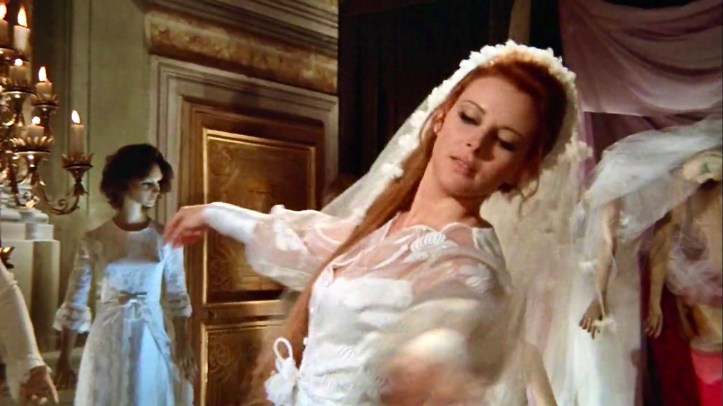
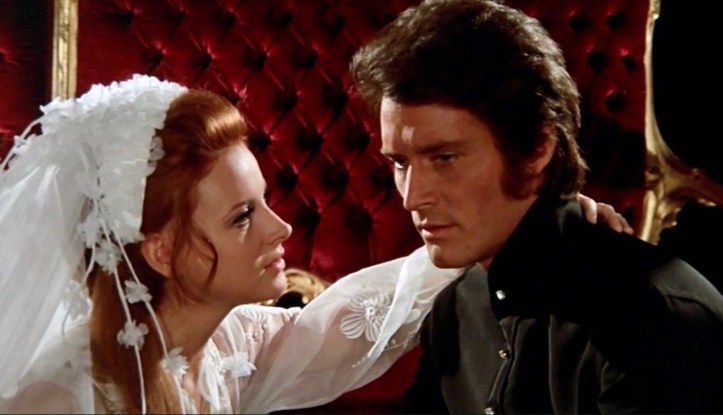
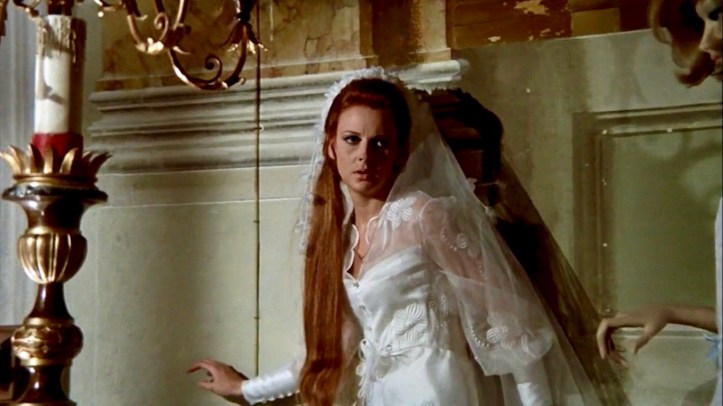
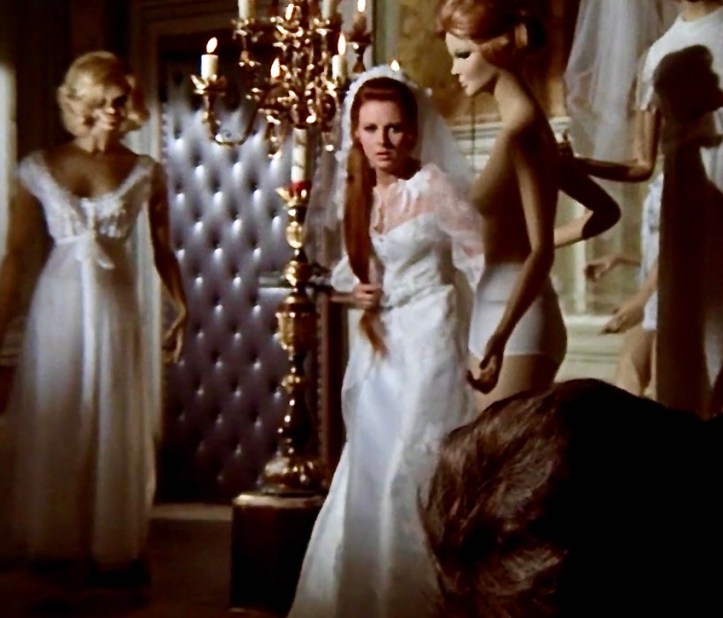
For her showdown scene with John, Helen wears an elegant bridal gown embroidered with a sparkling beaded overlay. It is adorned with a floral embroidered illusion neckline, sheer 1890-style gigot sleeves, and satin buttoned wrist cuffs. An ornamental tulle flower decorates the waistband, giving the gown the appearance of two pieces. A headband veil blooming with white tulle flowers and cascading vine strands completes the bridal look.

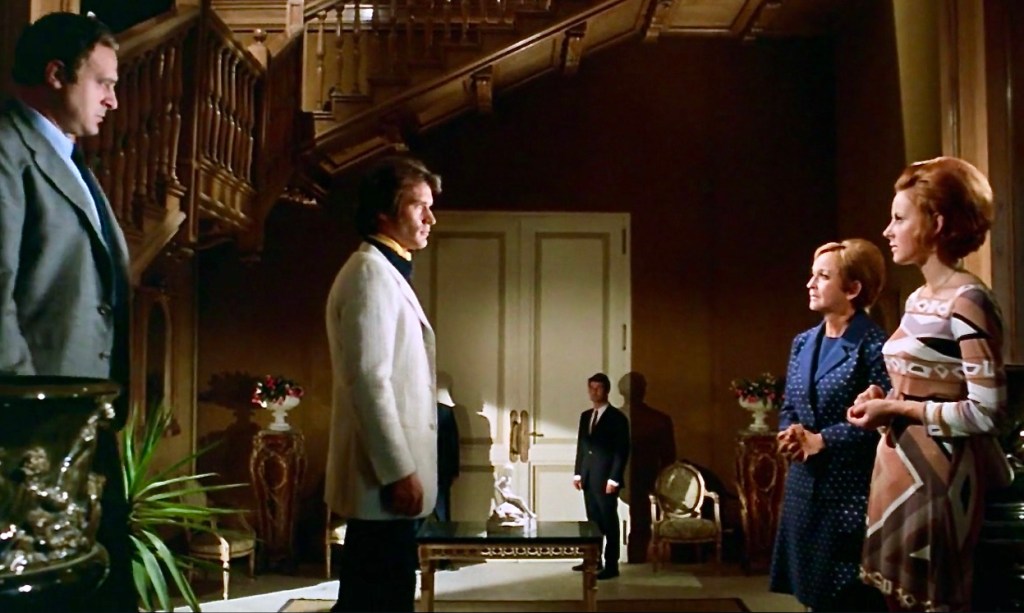
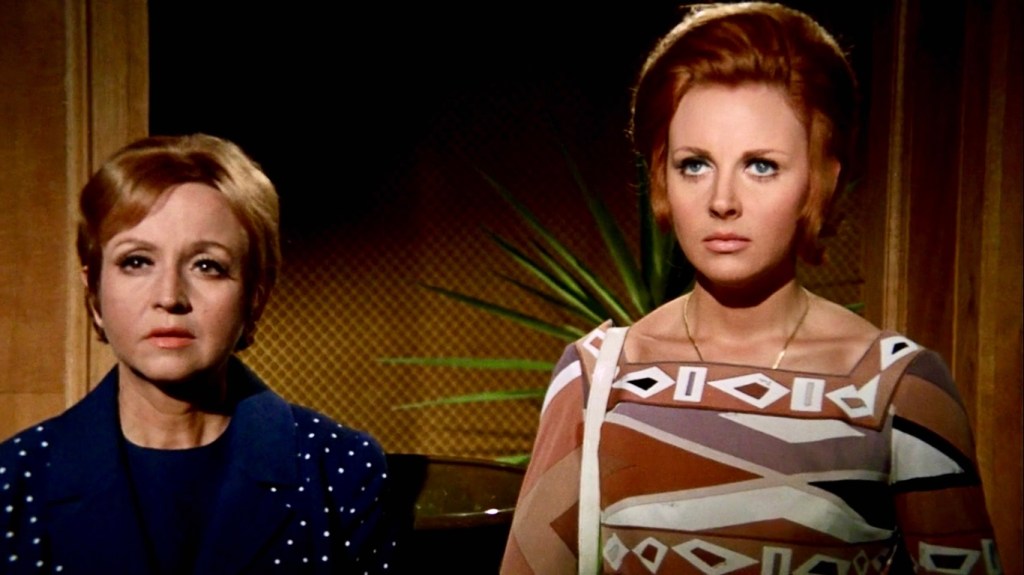
When John confronts Helen at the end of the film, she and Louise are waiting in the foyer as he is brought downstairs by Inspector Russell. Helen looks subdued wearing a cream and earth-toned abstract pattern dress, her long hair styled in a rounded updo. Louise is at her side, dressed in a polka dot dark blue jacket & skirt set.
The Bridal Fashions

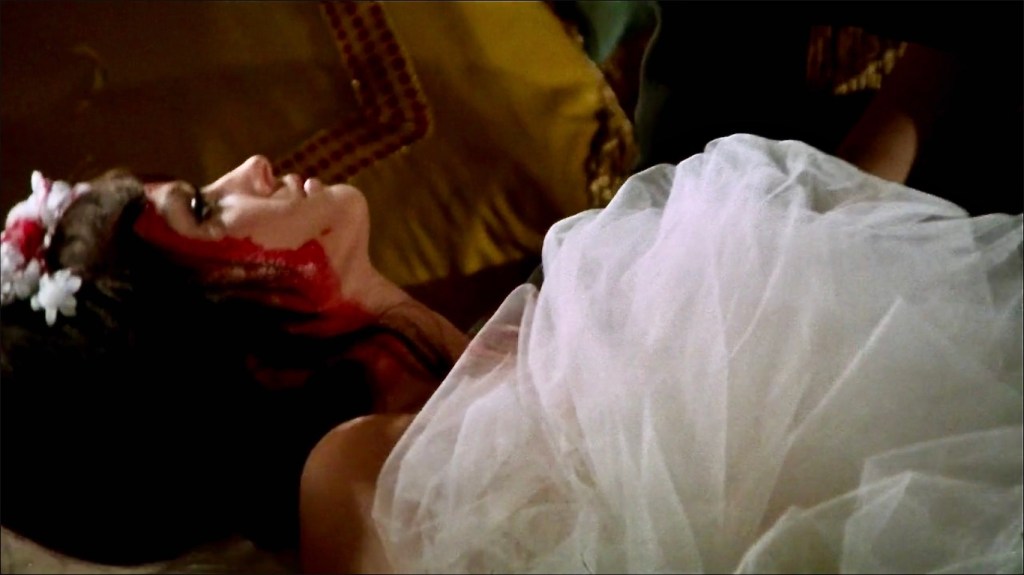
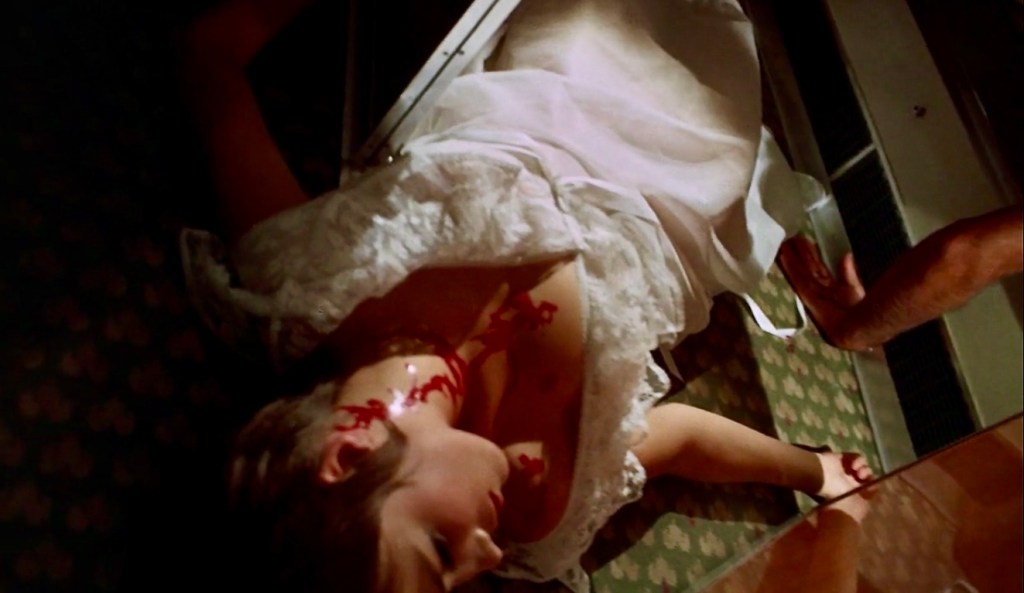
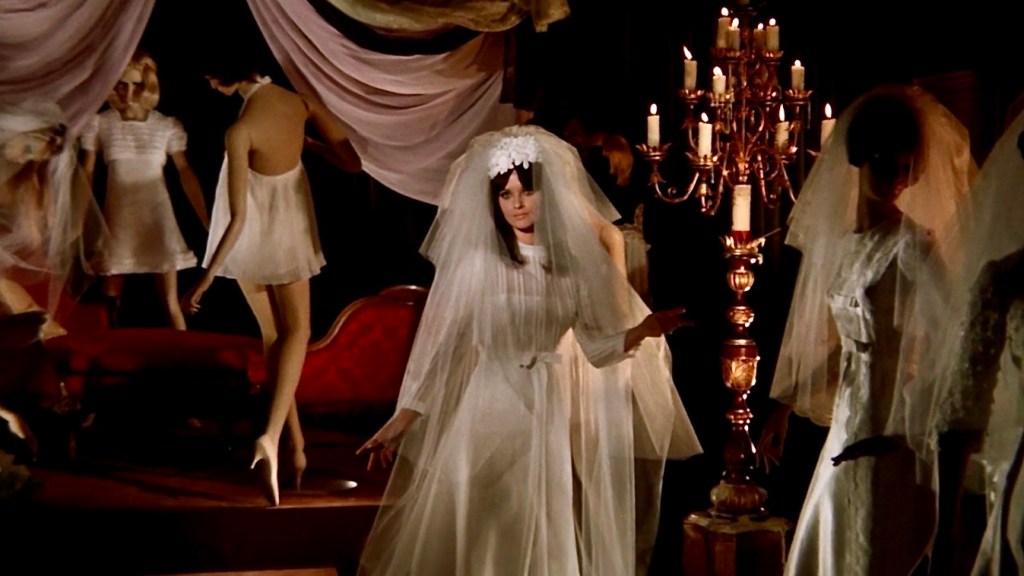
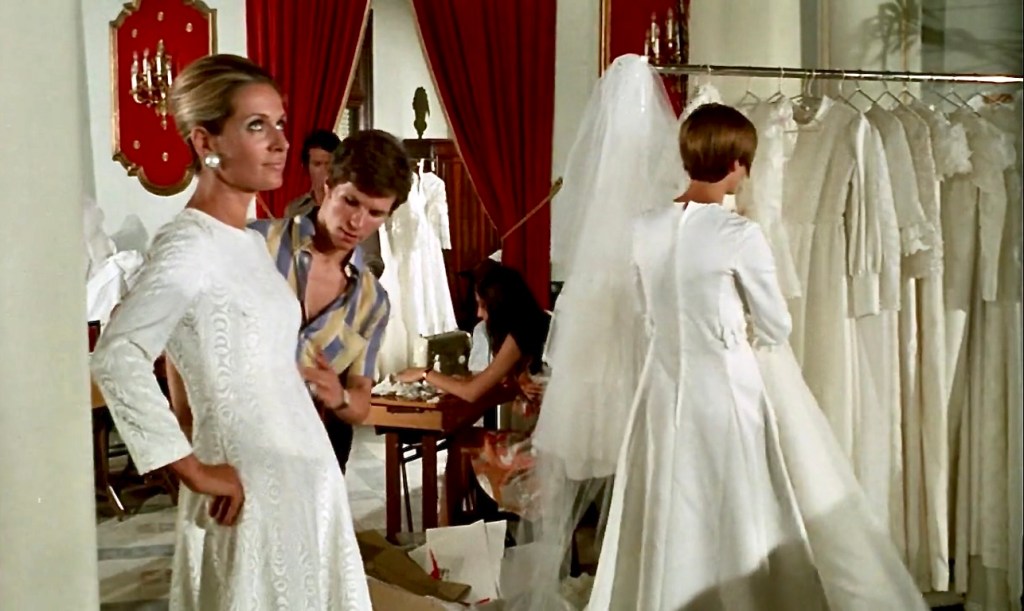

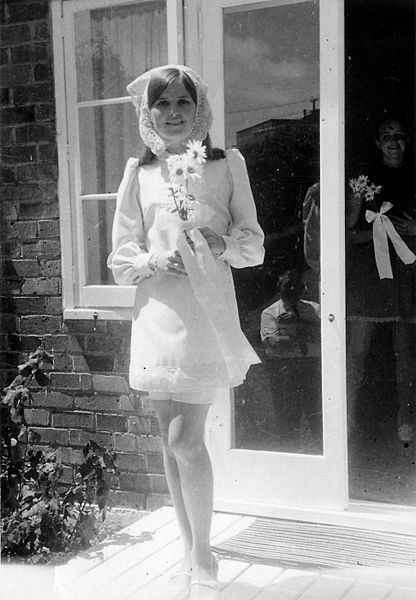
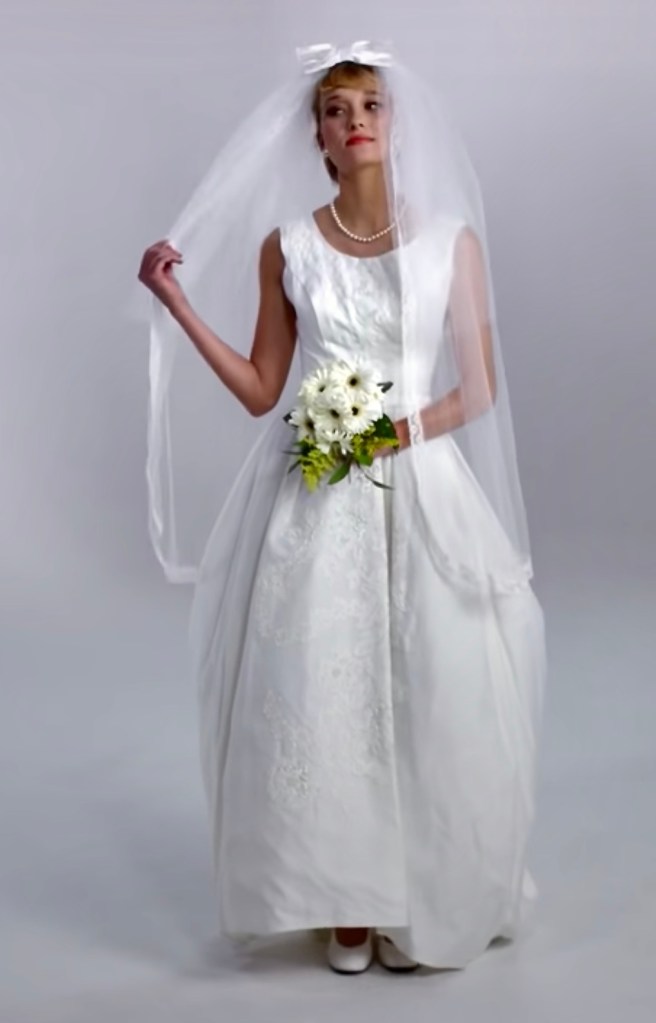
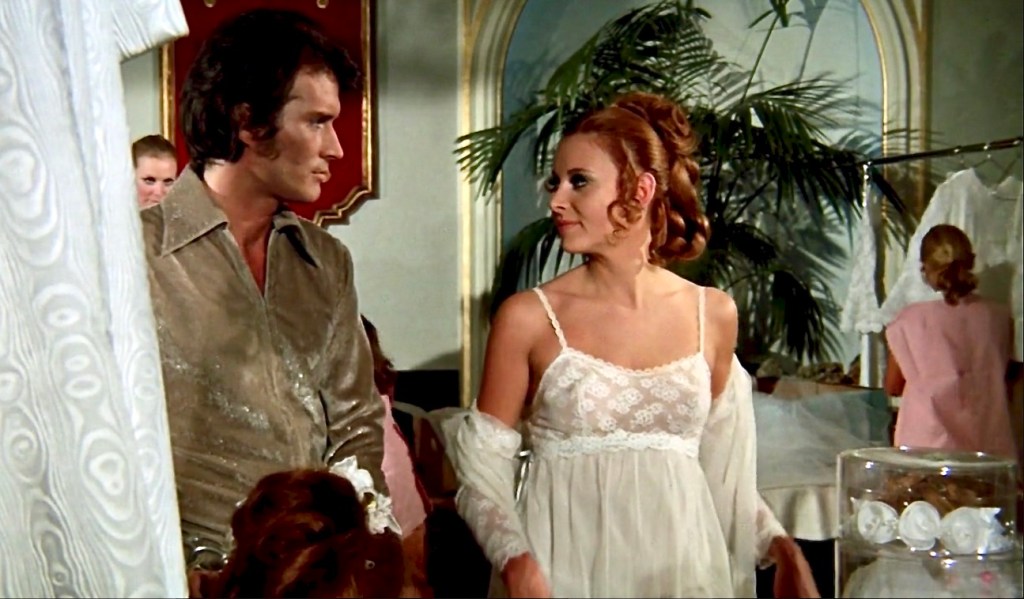
The main venue for all of HATCHET FOR THE HONEYMOON’s bridalwear is the House of Harrington, where models and mannequins wear vintage bridalwear made of shantung and moire fabrics as well as 1960s trends such as empire waistlines, raised hemlines, and hats with blue flower petals, fringes, and fur trim as alternatives to veiling.

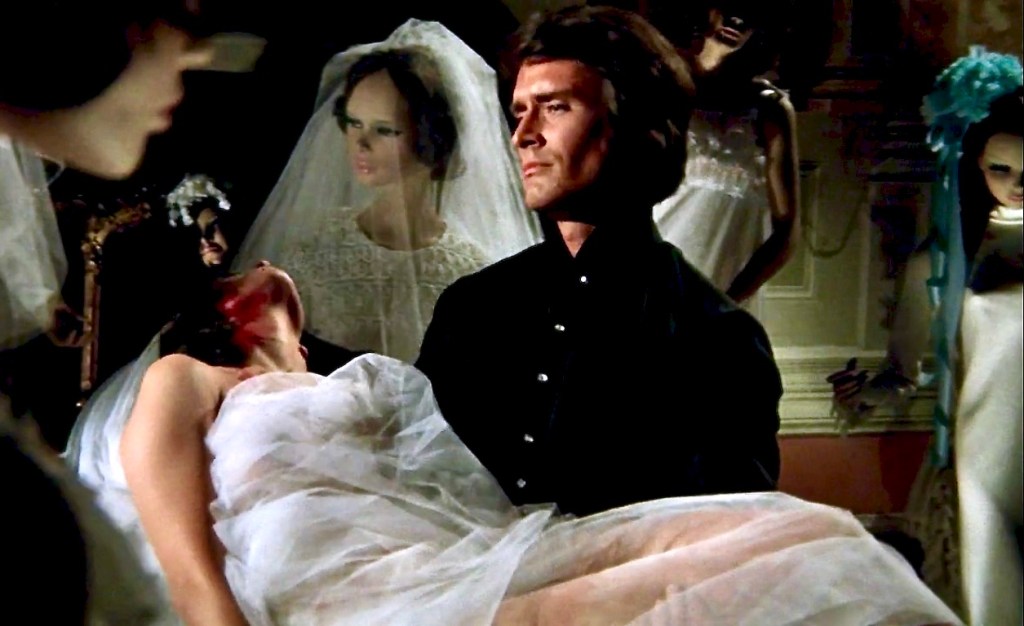
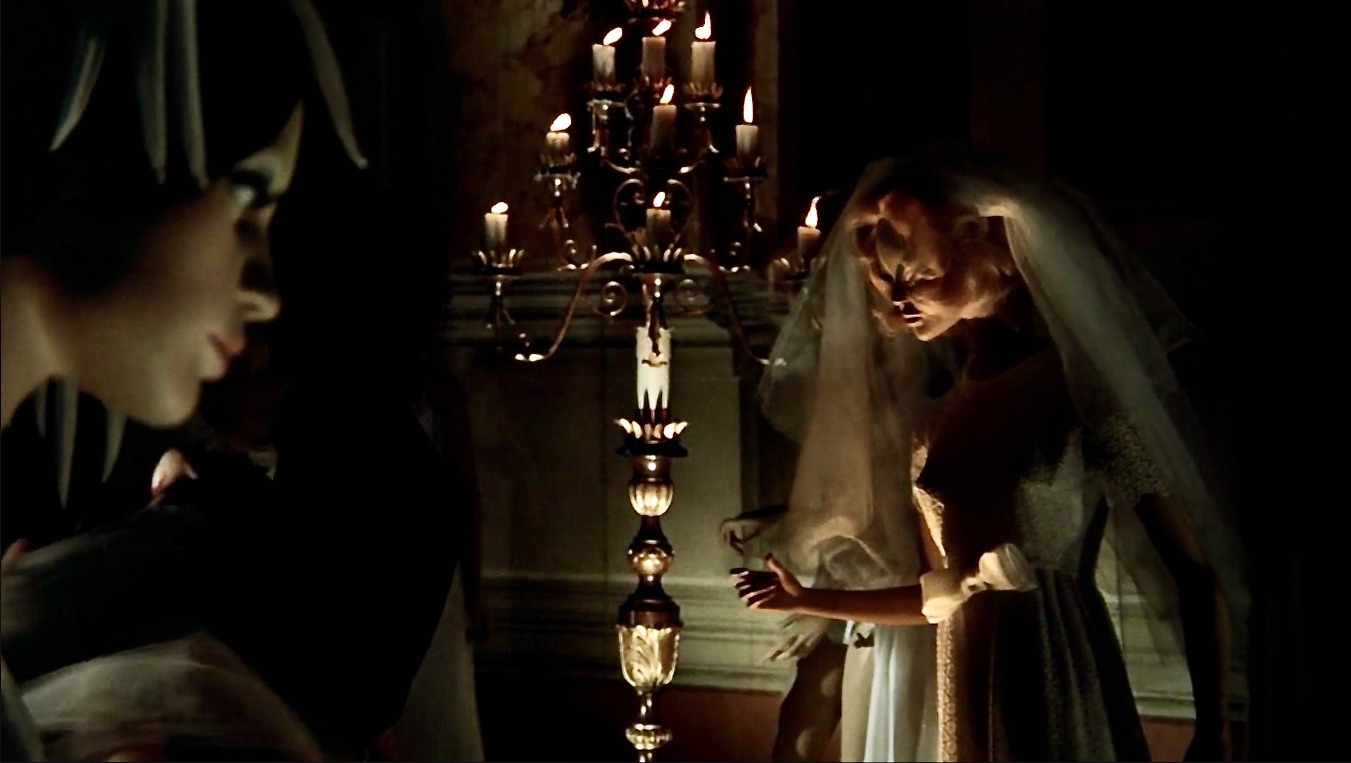
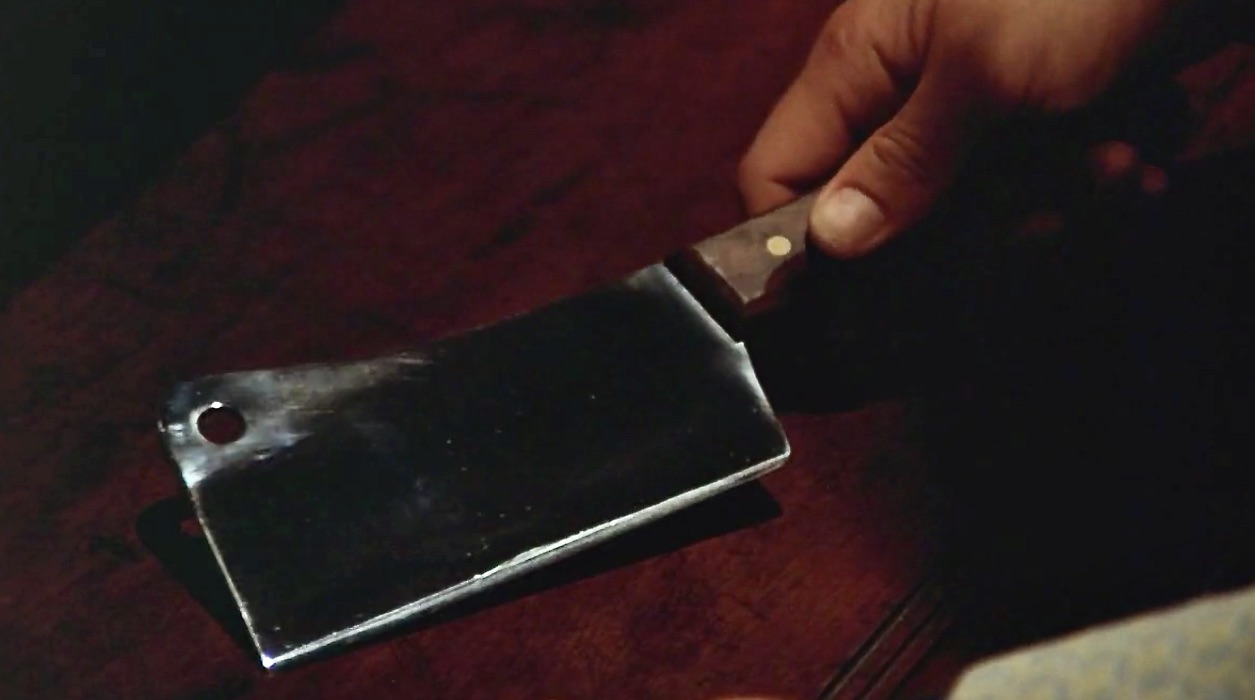
In a scene that paves the way for the ’80s grindhouse slasher classic MANIAC, John enters a vault room through a secret steel door in his office. This enormous Rococo-style space is filled with wall paintings, bronze candelabras, and mannequins draped in all of John’s mother’s gowns and lingerie since Harrington House was founded in 1927. It also serves as a handy place to store a hatchet, which John keeps in a giant, ornate wooden cabinet. He removes the hatchet from its resting place to murder Alice, a model at Harrington House. Alice is lured into his creepy room after hours when he learns that she is engaged to be married.
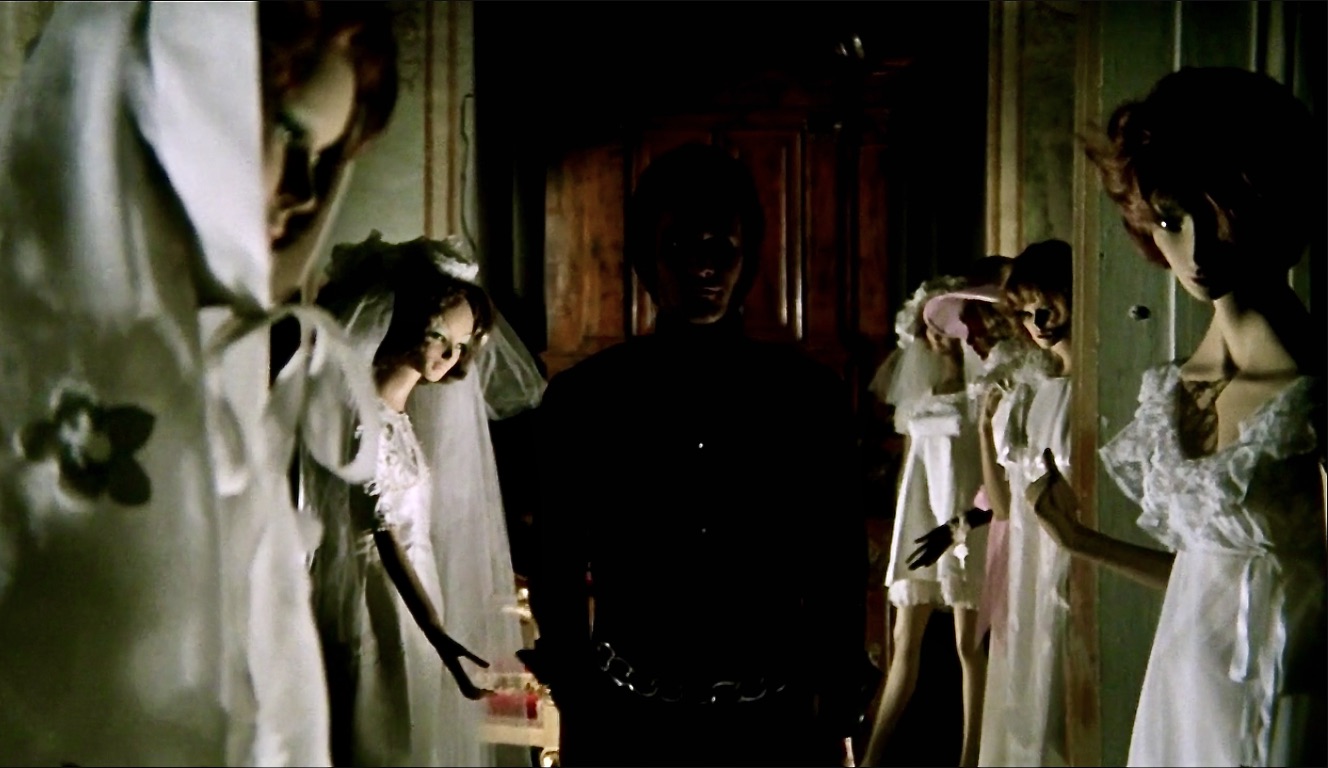
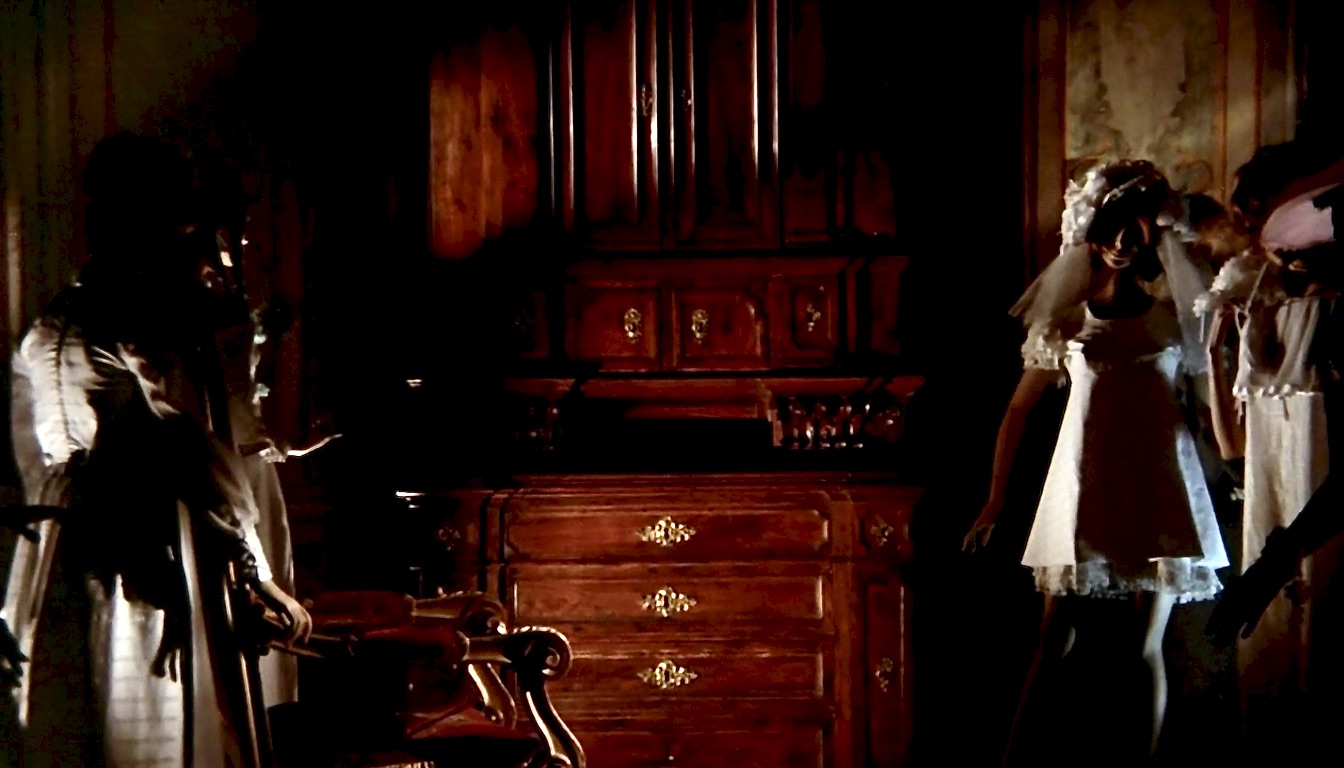


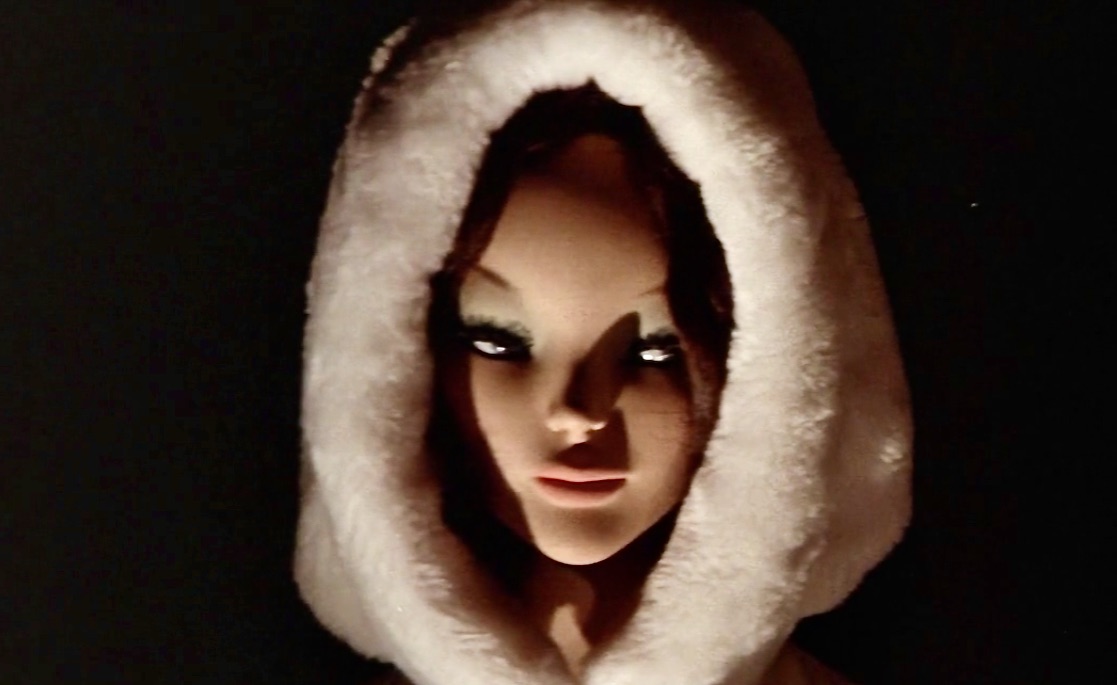

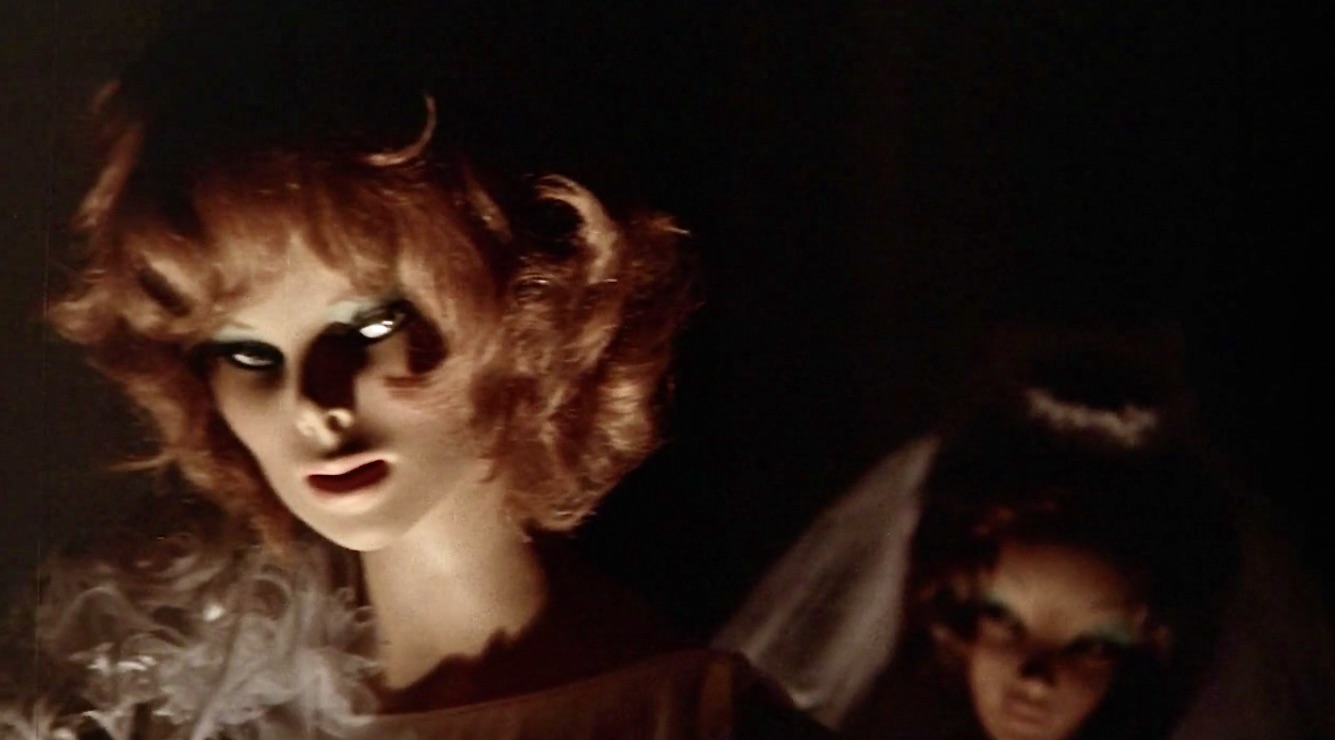
A photoshoot on the HH grounds features models striking poses in gauzy flower and lace embroidered chemises and baby doll nighties. Helen is a part of this shoot, modeling a cool column gown, which sports a rolled collar, and a back slit body-skimming skirt.
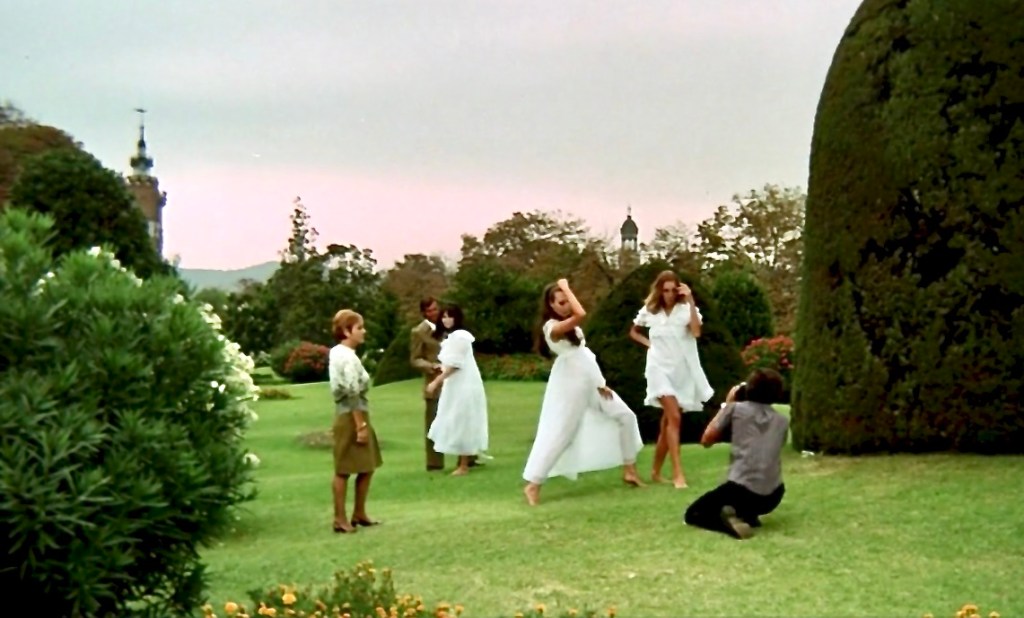
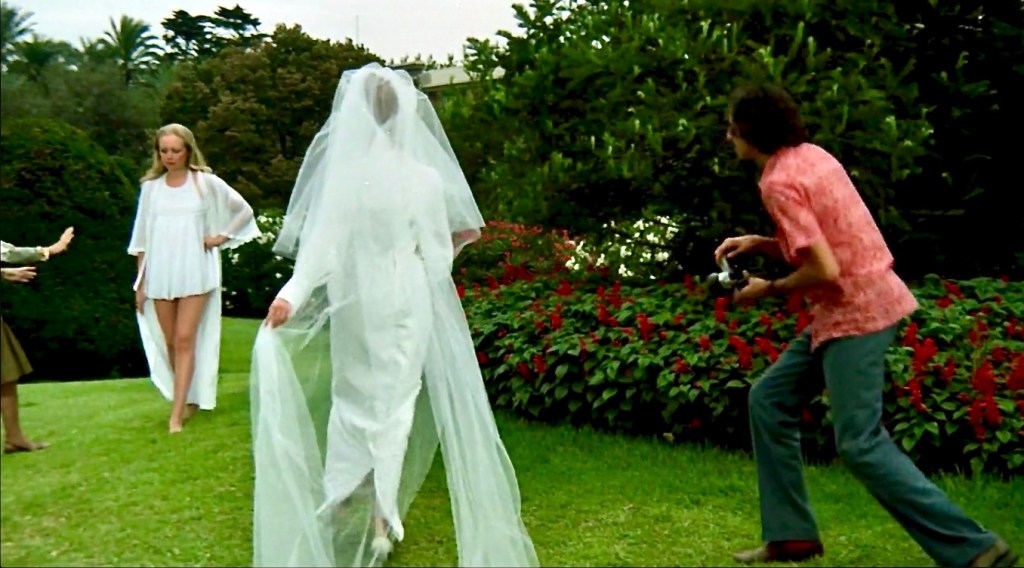

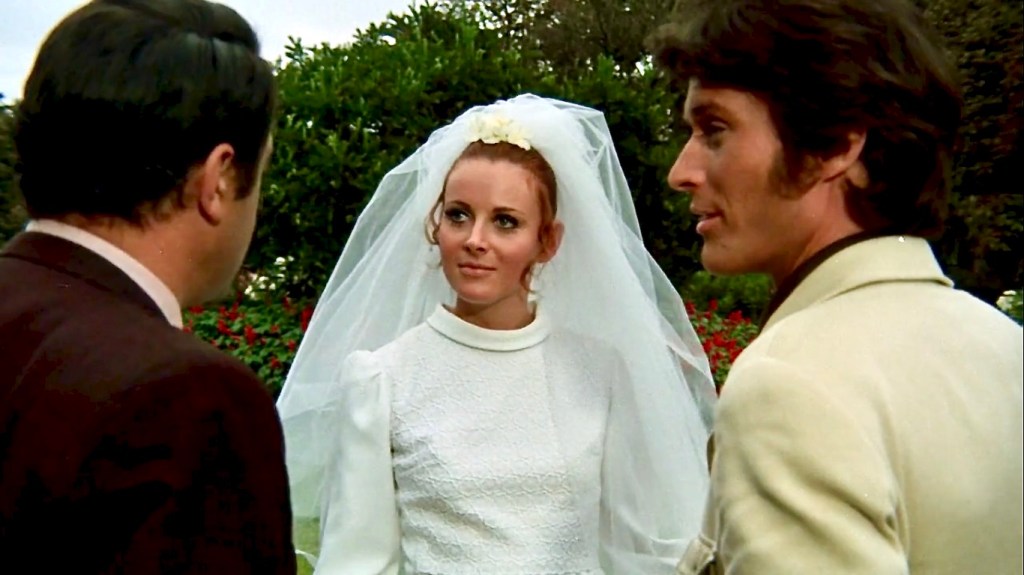
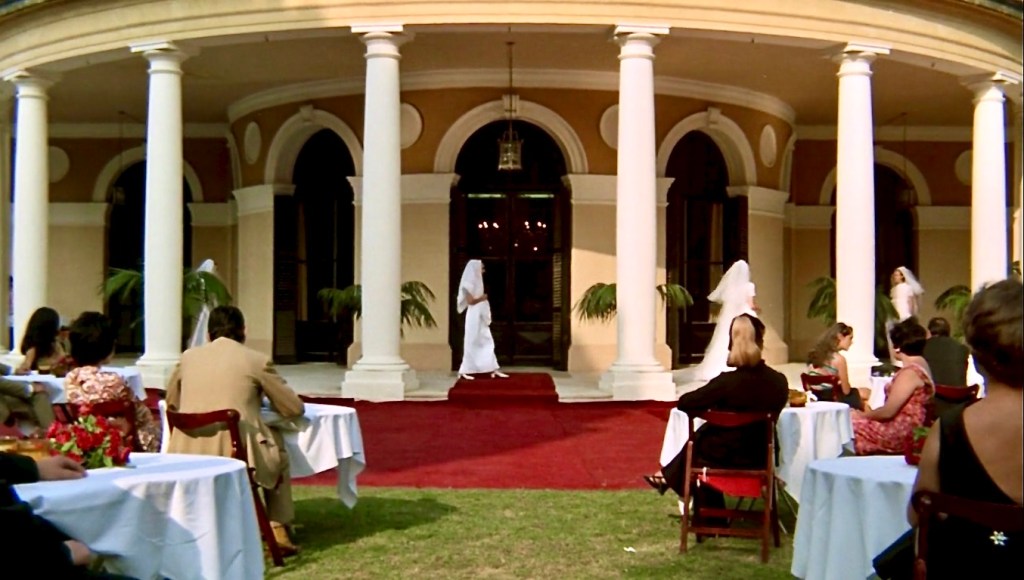
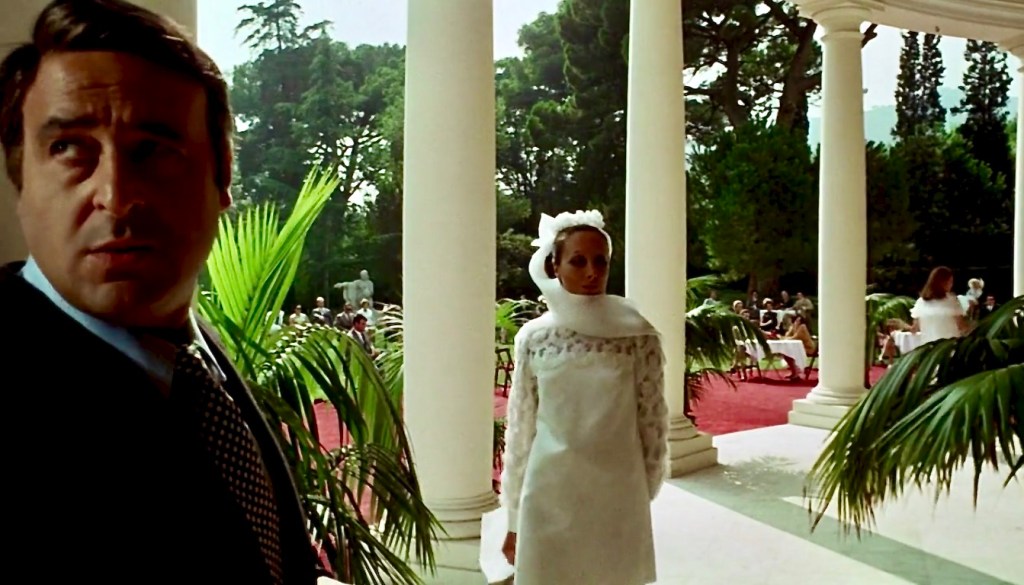
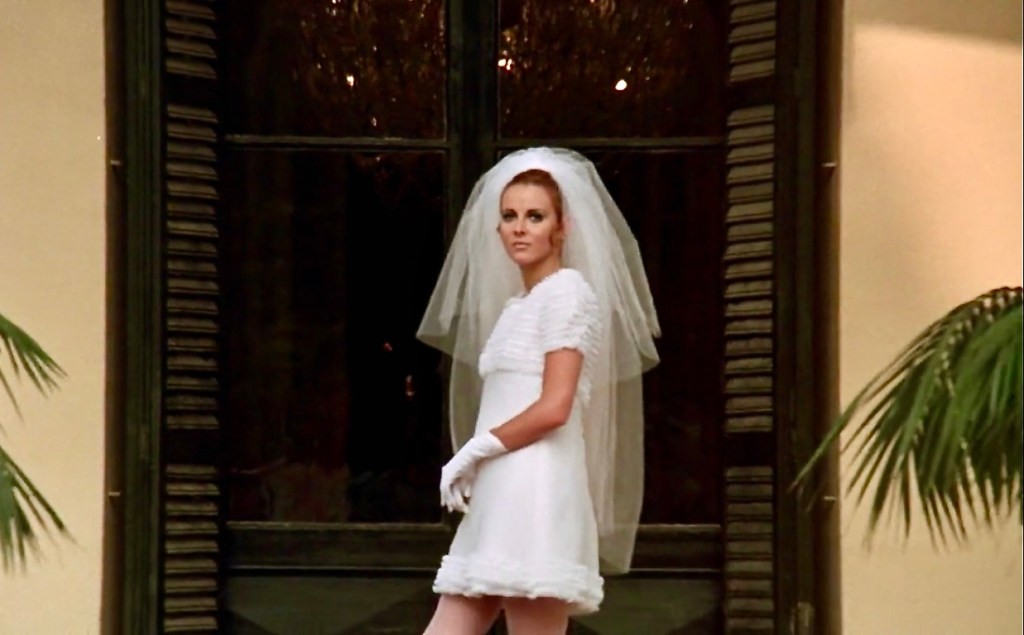
An al fresco bridal show scene showcases a runway parade of models strolling single file underneath Romantic-era outdoor columns, showing off pretty wedding gowns, with a few boudoir pieces thrown in. Helen is working hard and rocking three different looks in this fashion show. Her first look is a bridal lingerie set seen inside the fashion house, pre-show. She works her second “flower child” look as Model #21. (“Number 21…flower girl…a short dress whose top is completely ruffled with hand-made lace…the ruffles are repeated at the hem…”). The rolled collar & column skirt dress she modeled for the earlier shoot on the HH grounds is her third & final bridal look.

Final thoughts on HFTH style:
HFTH’s fashion focus is clearly dominated by John, Mildred, and Helen, followed by bridal fashions and background players wearing period-appropriate clothing. Helen’s fashion sense and Mildred’s haute hooded look make them both strong fashion MVP contenders, though John’s style stands out the most. His wardrobe masks his aggressive alter ego, making him the most intriguing character in terms of fashion.
 FEAR FASHION